SHLD Awards Finalist Summary
Congratulations the Grand Hyatt DFW has been selected as a SHLD Awards Finalist!
Your project was evaluated by the following judges:
-
![A woman with long wavy brown hair smiling, wearing a gray business suit and white blouse, standing with arms crossed against a gray textured background.]()
Laurie Woliung
HSDC/MindClick Advisor
-
![Fred Brandstrader]()
Fred Brandstrader
Vice President - Construction and Capital Expenditures Hyatt
-
![A woman with blonde hair wearing glasses, earrings, and a black dress, smiling in front of a pink background.]()
Ashley Michaels
Sr. Manager Product Experience & Prototypes Global Design, Hilton
-
![Portrait of a smiling man with light hair, wearing a purple shirt and plaid blazer, against a plain white background.]()
Robert Stuckey
Vice President, Strategic Partnerships and Business Development-AHLA
-
![Michelle Finn]()
Michelle Finn
VP Design + Construction Products & Services The BHN Group
-
![Kavitha Iyer]()
Kavitha Iyer
VP Architecture & Design
Choice Hotels International -
![Diane Nguyen]()
Diane Nguyen
Vice President of Design at Highgate Hotels
-
![A woman with long red hair, wearing a black blazer over a purple blouse, standing with arms crossed and smiling in an indoor setting with a dark background.]()
Kari Olsen Carr
Senior Vice President at Pebblebrook Hotel Trust
-
![Vanessa Stanley]()
Vanessa Stanley
Vice President of New Builds + Portfolio Strategies at PM Hotel Group
-
![Robyn Kaminski]()
Robyn Kaminski
Senior Director, Design Strategy at Marriott International







Here is how your project was evaluated:
Vision (25% of Total Points)
Scoring Guidance Statement: The project presents a clear and inspiring design intent that elevates the guest experience and aligns with the property’s goals.
The project’s design intent is clearly communicated and aligns with the property’s goals.
The guest experience envisioned through the design is meaningful and well articulated.
The overall vision is distinctive and contributes to a memorable and transformative stay experience.
The use of color, form, materials, and lighting enhance the overall ambiance and guest experience.
Creativity (25% of Total Points)
Scoring Guidance Statement: The design demonstrates original, purpose-driven thinking that achieves distinctive results beyond conventional solutions.
The project demonstrates original thinking that goes beyond standard design approaches.
The design achieves a clear purpose while delivering creative, unconventional results.
The project reflects innovation that enhances both the guest experience and the property’s identity.
The project demonstrates creative thinking in the reuse, repurposing, or refurbishment of existing materials or furnishings.
Execution (25% of Total Points)
Scoring Guidance Statement: The project integrates sustainability, design, budget, and guest experience into a cohesive and achievable solution.
The project balances design intent, sustainability goals, and budget while maintaining strong attention to detail and collaboration.
The design integrates sustainability cohesively into the guest experience and overall project execution.
The design caters to the practical needs of guests and staff, including room layout, public spaces, amenities, and service flow, as appropriate for the category.
The project shows consideration for the long-term life of the design, with durable choices that can adapt to future updates or refinements.
Impact (25% of Total Points)
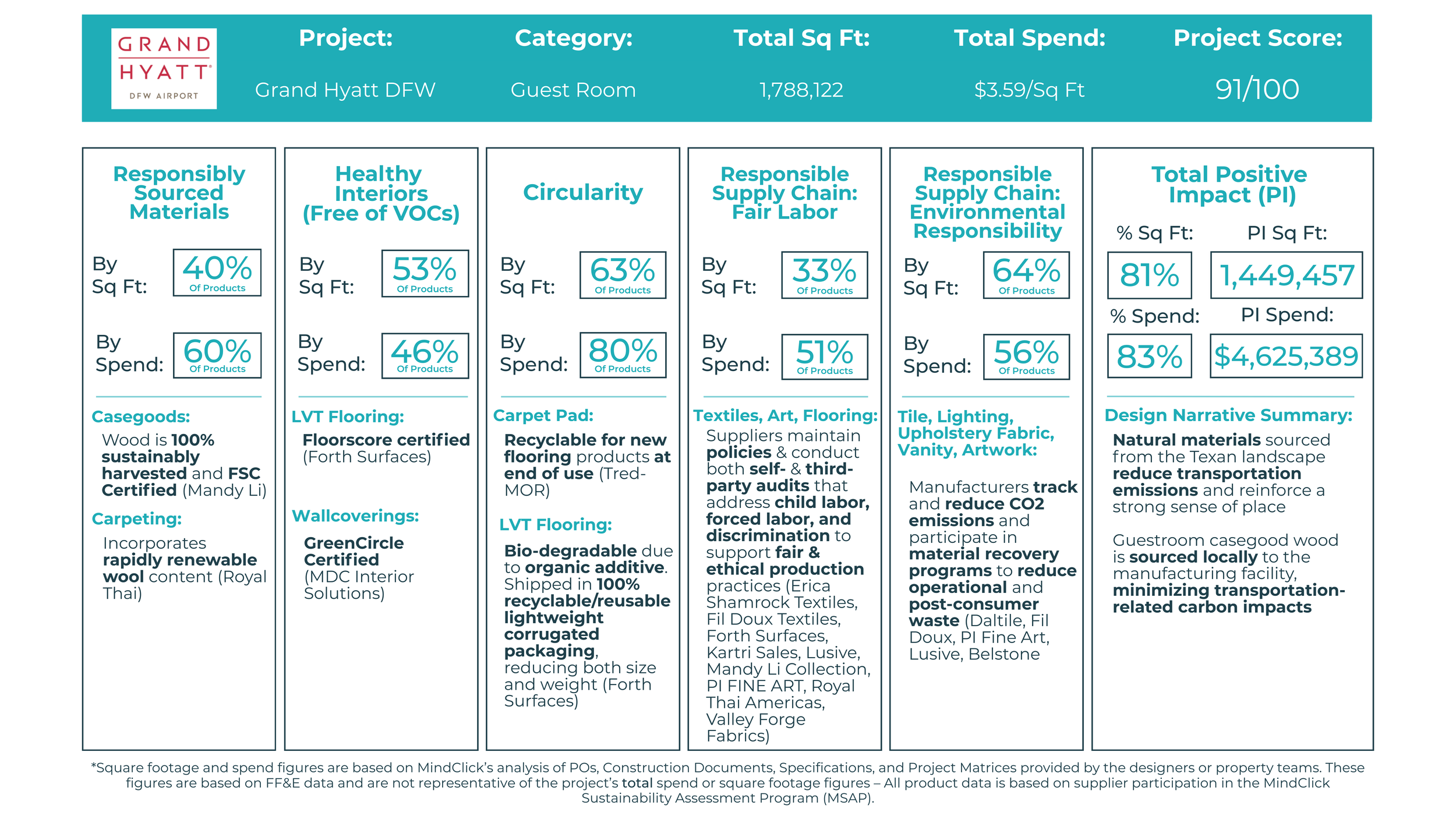
Scoring Guidance Statement: For this question, Judges were asked to refer to the Impact & Wellness Overview (see below) provided by MindClick, to better understand the project's impact*
*Analysis based upon the available Product Intelligence™ associated with the vendors selected for the project. MindClick’s Product Intelligence™ comes from verifying product sustainability attributes throughout the product lifecycle. This verification requires vendor completion of the MindClick Sustainability Assessment Program
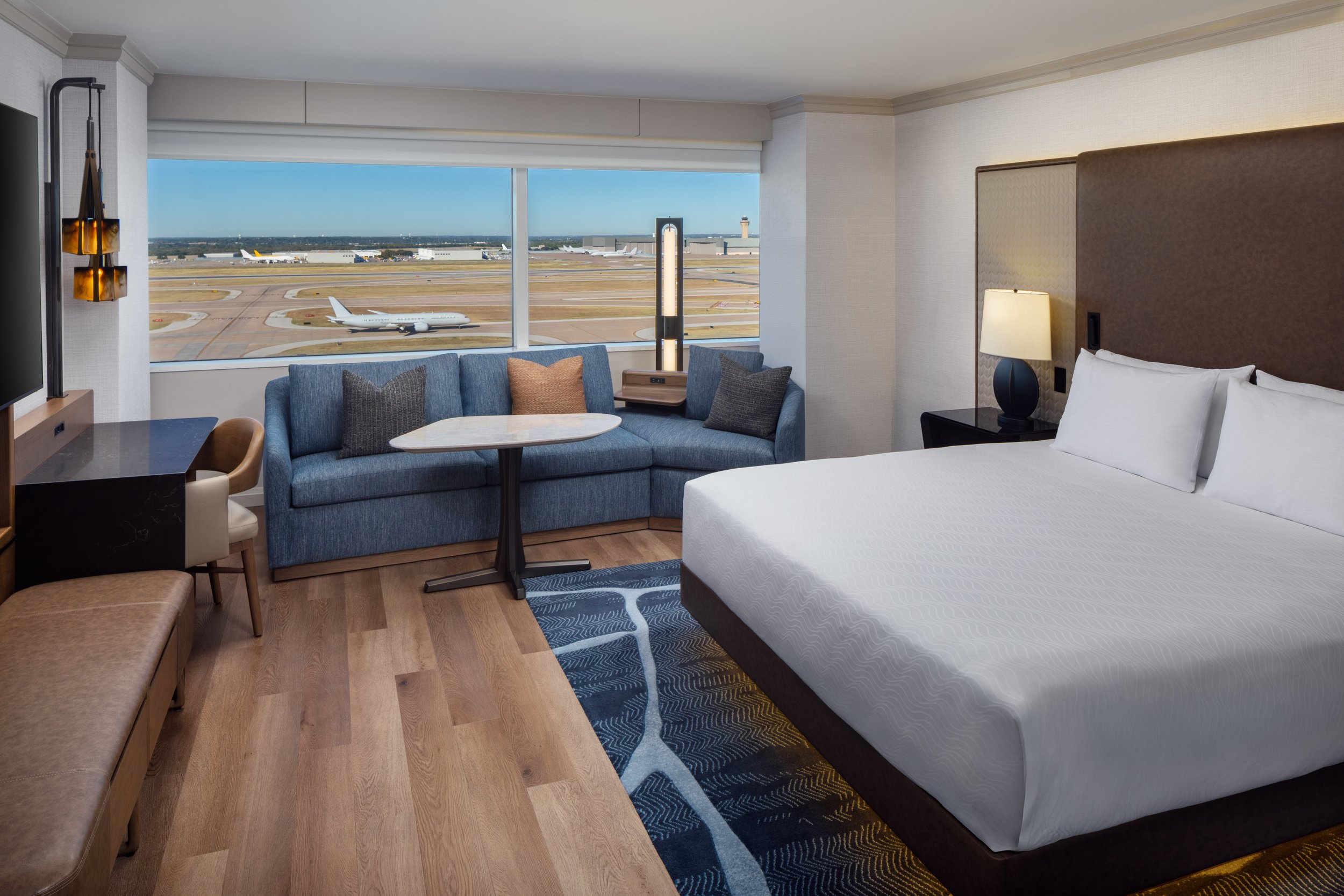
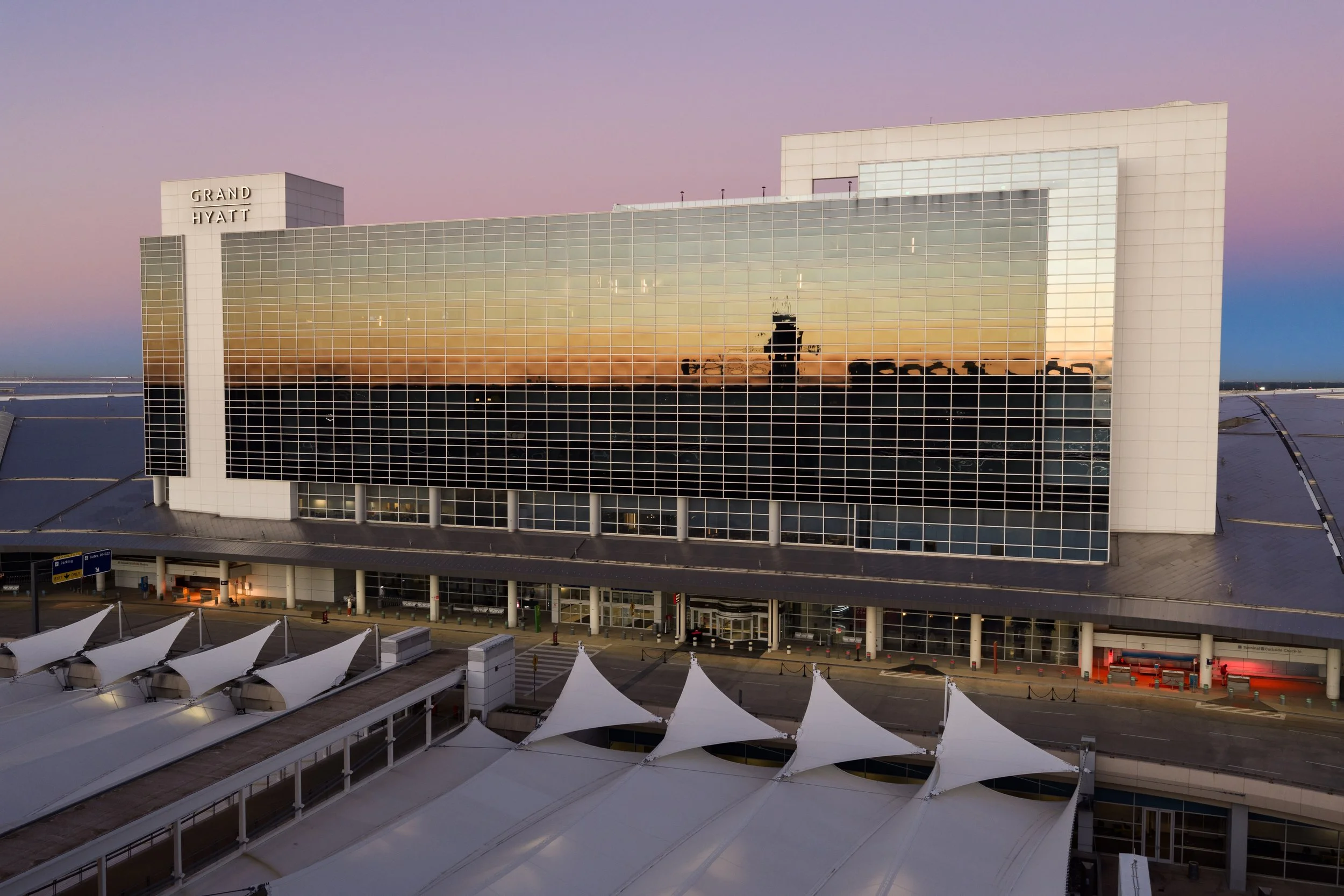
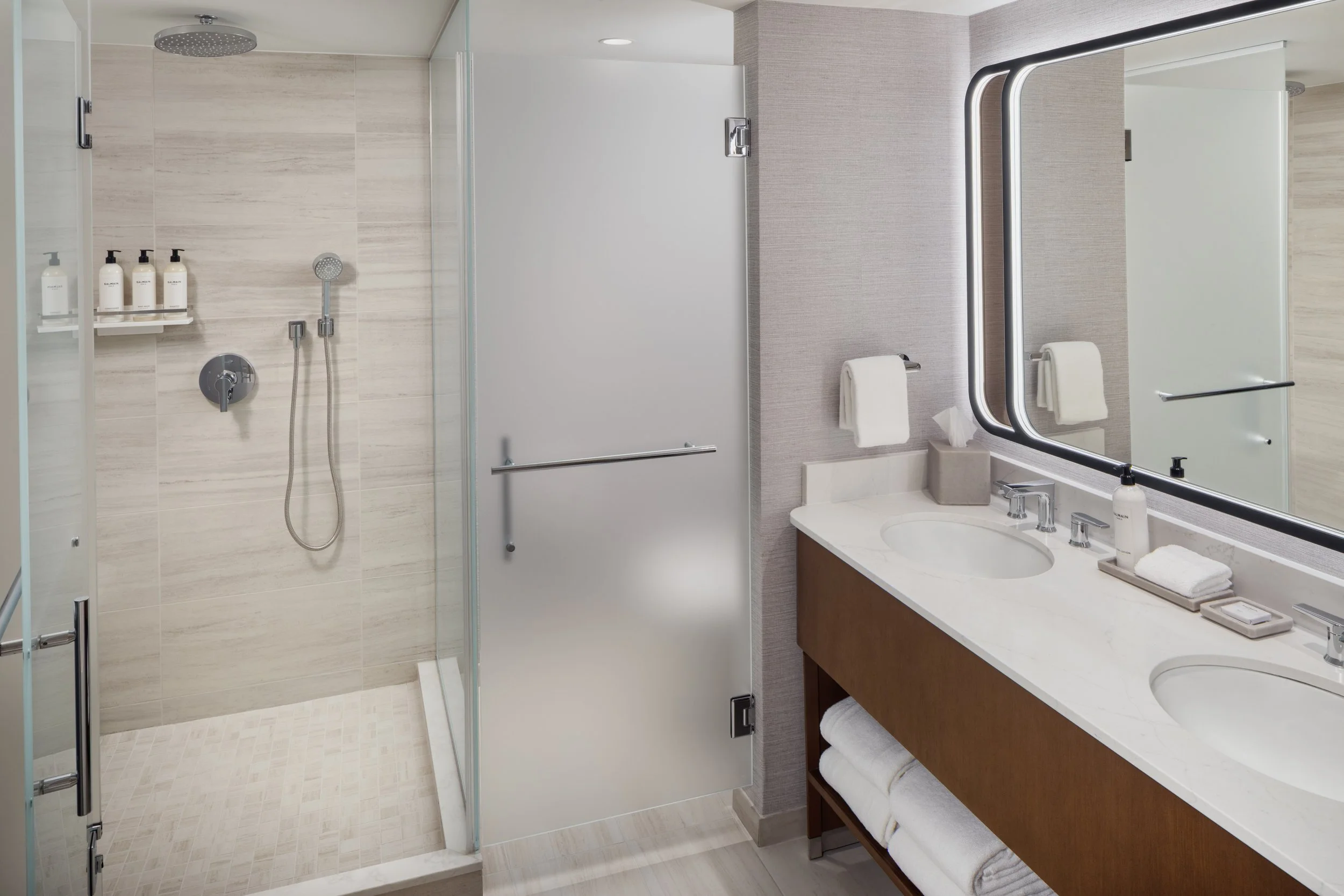
Grand Hyatt DFW
Category: Guest Room
Design Firm: Parker-Torres Design
Design Narrative
CONNECTING LUXURY WITH LOCALE:
The design of DFW International Airport reflects the geographical link between Dallas and Fort Worth, forming two united semicircles. Like this junction of the two cities, many elements converge here:
•Texan heritage and contemporary style
•Aviation history and cutting-edge technology
•Luxurious materials and sustainability
•Local pioneers and global travelers
DFW is the hub where these aspects connect, embodied by the Grand Hyatt DFW.
Physical:
DFW has a unique layout amongst airports. Architect Gyo Obata envisioned the airport as a series of smaller, human-scale airports connected by a central concourse. The semi-circular layouts were designed to allow for ample plane parking and maneuvering around these smaller gateways, while also creating small centralized gathering points for travelers to start their journeys and fan out.
Interestingly, the parallel semicircles are a microcosm of the relationship between Dallas and Fort Worth, whose surrounding highways form two lateral semicircular shapes. The dynamic lines of the two runways extending out at either side of the airport campus provide another intriguing form that is mirrored in the extension of highway lines away from the DFW metroplex. Emphasizing the physical connection between the two cities and the various terminals acts as a visual metaphor for the way that DFW creates meaningful connections in the community and to the world.
Local Art:
Local artist Lee Albert Hill was born in Dallas and holds a studio in Fort Worth. From there, he creates intricate geometric paintings that evoke movement and liveliness through the lens of architectural structure and aerial viewpoints.
The visual stories that these layered paintings evoke align with the narrative of DFW’s unique contribution to travel history, while adding the human and local element that makes the airport special. The bold colors and dynamic forms are indicative of the vibrant and growing community in the DFW area. Abstractly, parallels can be drawn between Hill’s shapes and the airport’s unique architectural and runway layout.
Throughout the property, the design will celebrate local artists to connect the property with the surrounding communities. Supporting local artists also supports the health of the community.
Celebrating the Singular of DFW:
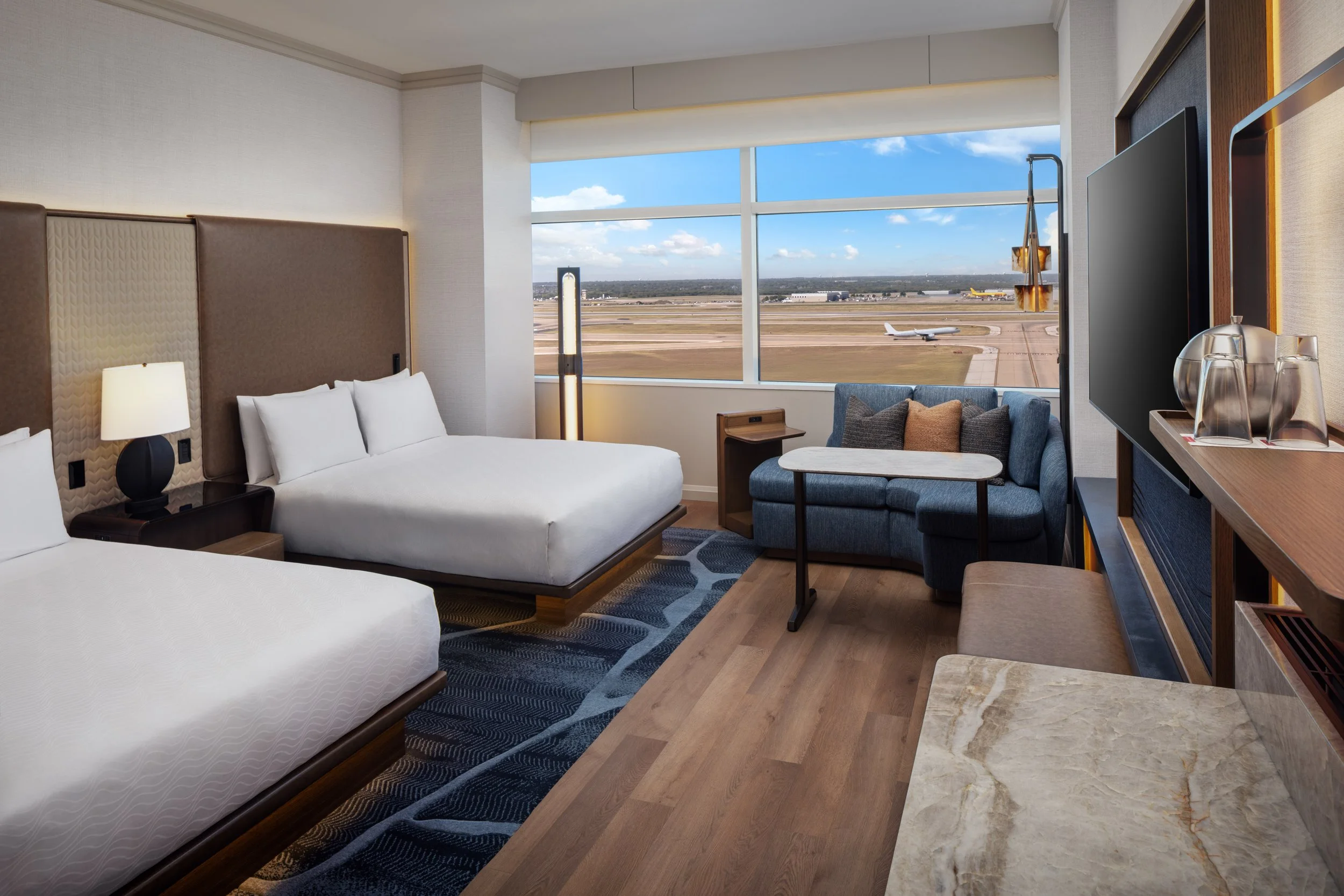
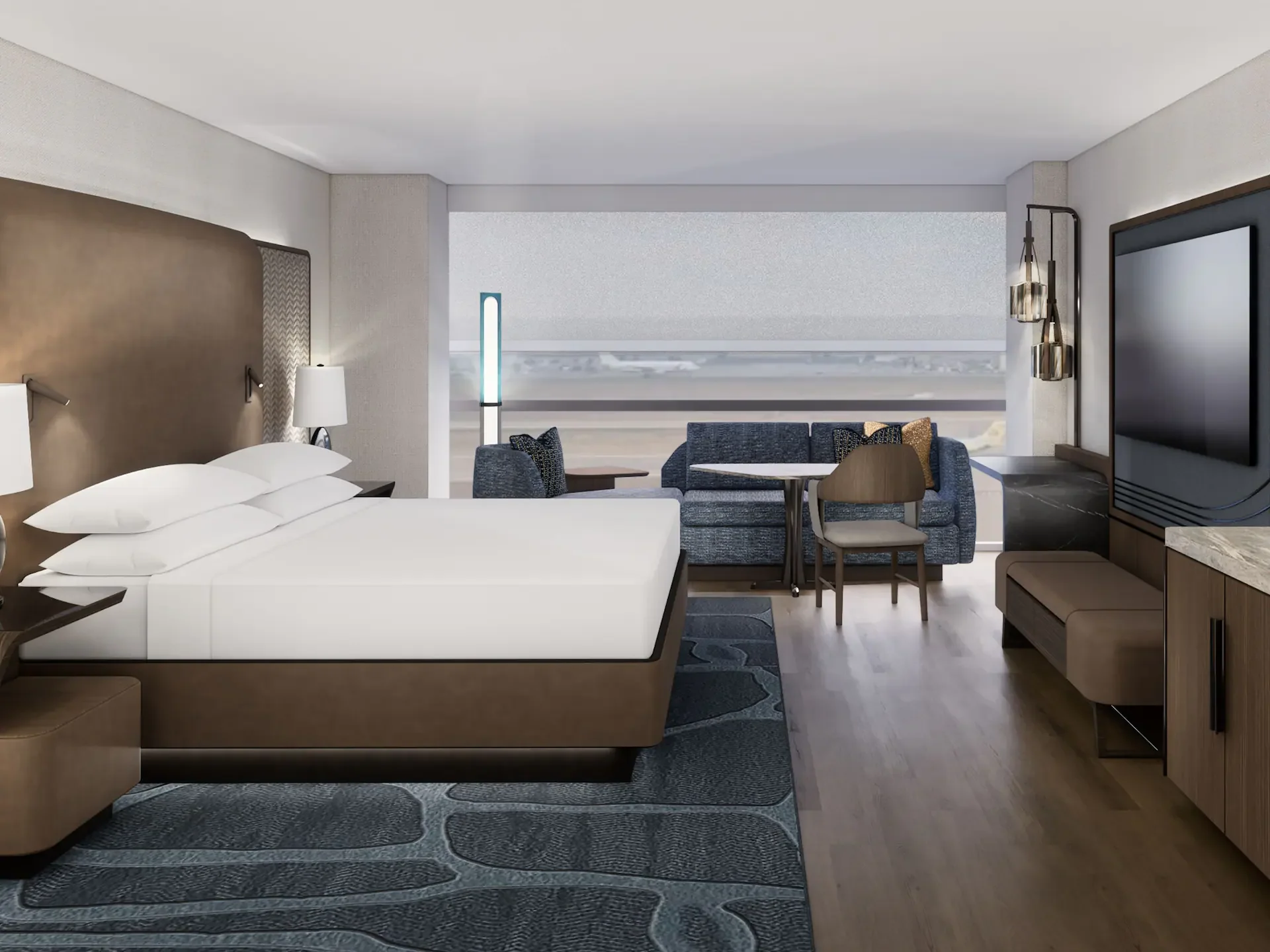
DFW’s 11-sided air traffic control cab is the only one of its kind in the world. The shape of the floor lamp references the towering structure in the guestroom.
The unique ATC cab reflects the history of innovation that defines DFW. That spirit of innovation continues today as the airport leads in sustainable practices, becoming the first carbon neutral airport in the Americas. To achieve this, DFW has implemented innovations such as solar power and a new zero-carbon utility plant. These efforts align with today’s travelers as they seek sustainability along with global connectivity.
Drawing attention to these elements creates meaningful connections for guests through interesting stories and shared goals.
Local Materials:
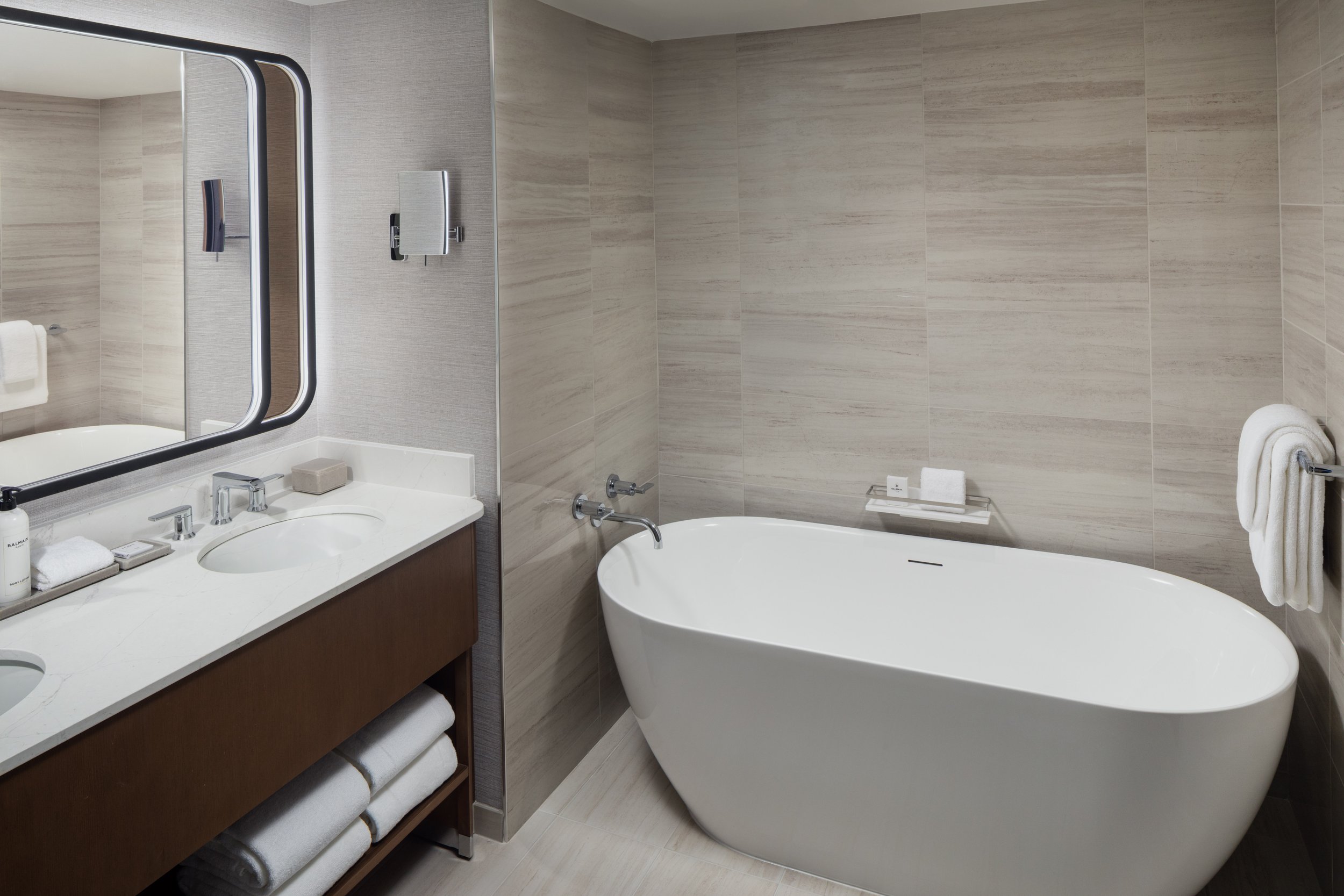
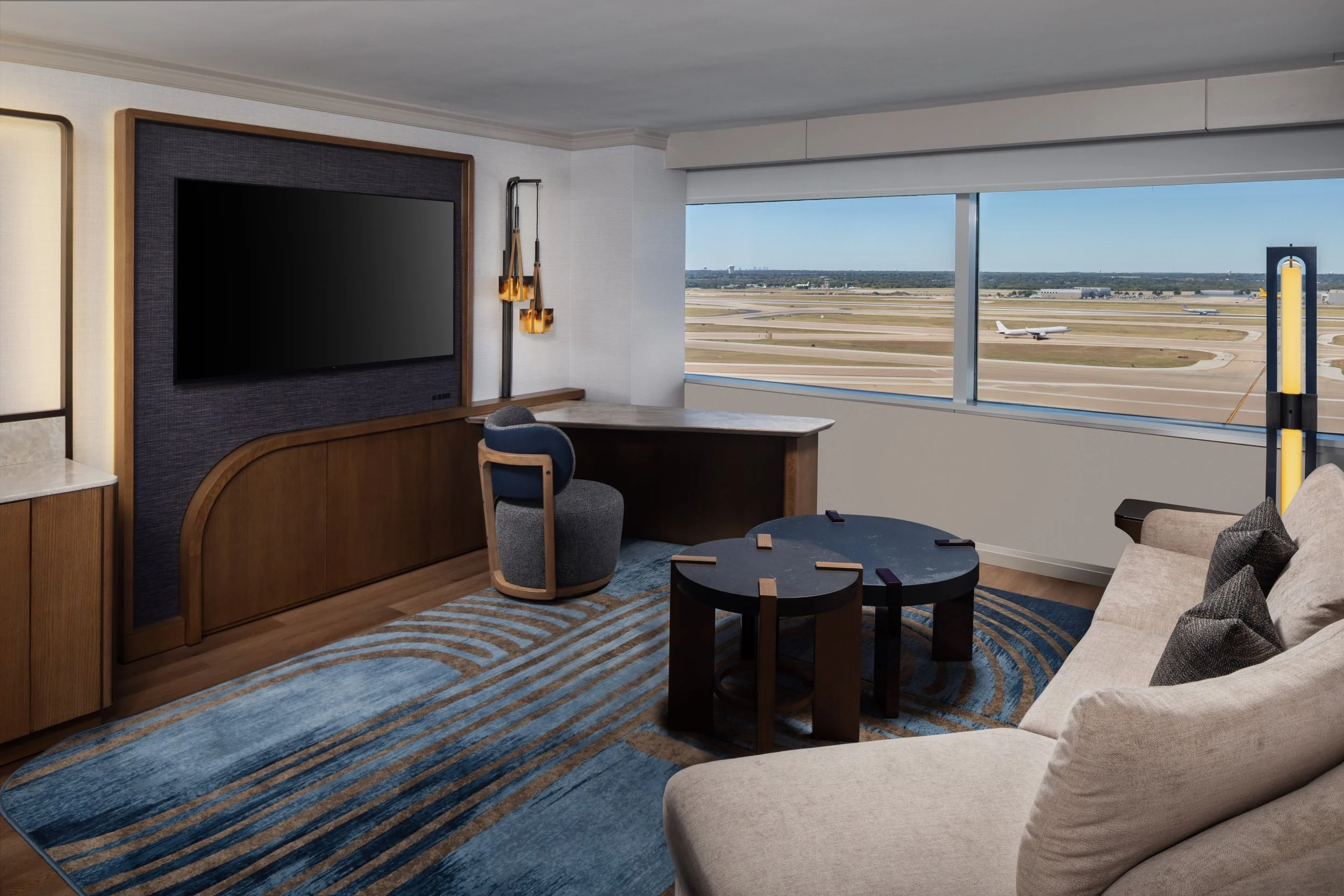
Adding natural materials that reflect the Texan landscape helps to root the design in a sense of place. It also helps reduce emissions related to the transportation of goods. These materials include local wood and stone.
During the production process, we worked with manufacturers to ensure that we were sourcing materials with lower environmental impacts. For example, we opted for a wood species that was local to the casegood factory to reduce transportation emissions. The decorative pillows in the guestrooms were produced by a Texas company, reducing the impact caused by shipping fabrics and finished pillows back and forth overseas.
Nods to Western heritage are sophisticated and subtle, as in the luxurious horn handles that accent the minibar cabinet. An updated palette reflects the surrounding prairie ecosystem, incorporating a subdued green alongside shades of natural blues and warm neutrals.
Impact and Wellness Overview