Hotel Polaris
Category: Guest Room, Public Space
Design Firm: Blur Workshop
Design Narrative
Our design for the hotel, located just outside the North Gate of the United States Air Force Academy in Colorado Springs reflects the unique character of the Academy’s campus while offering a modern, luxury experience with a strong connection to the surrounding landscape. Drawing inspiration from the Academy’s iconic architecture and history, our approach provides a planning, architectural, and interior design experience that reinterprets and updates the existing forms, patterns, materials, and detailing consistent with a mid-century modern vocabulary found in the original campus design.
The hotel’s architectural design is structured around principles that echo the organization of the United States Air Force Academy Campus. Key elements that draw inspiration from the Academy include:
Grid Organization: The hotel is laid out using the Academy’s organizing grid with spaces that align to exterior plazas and terraces creating axial view corridors similar to those at the campus.
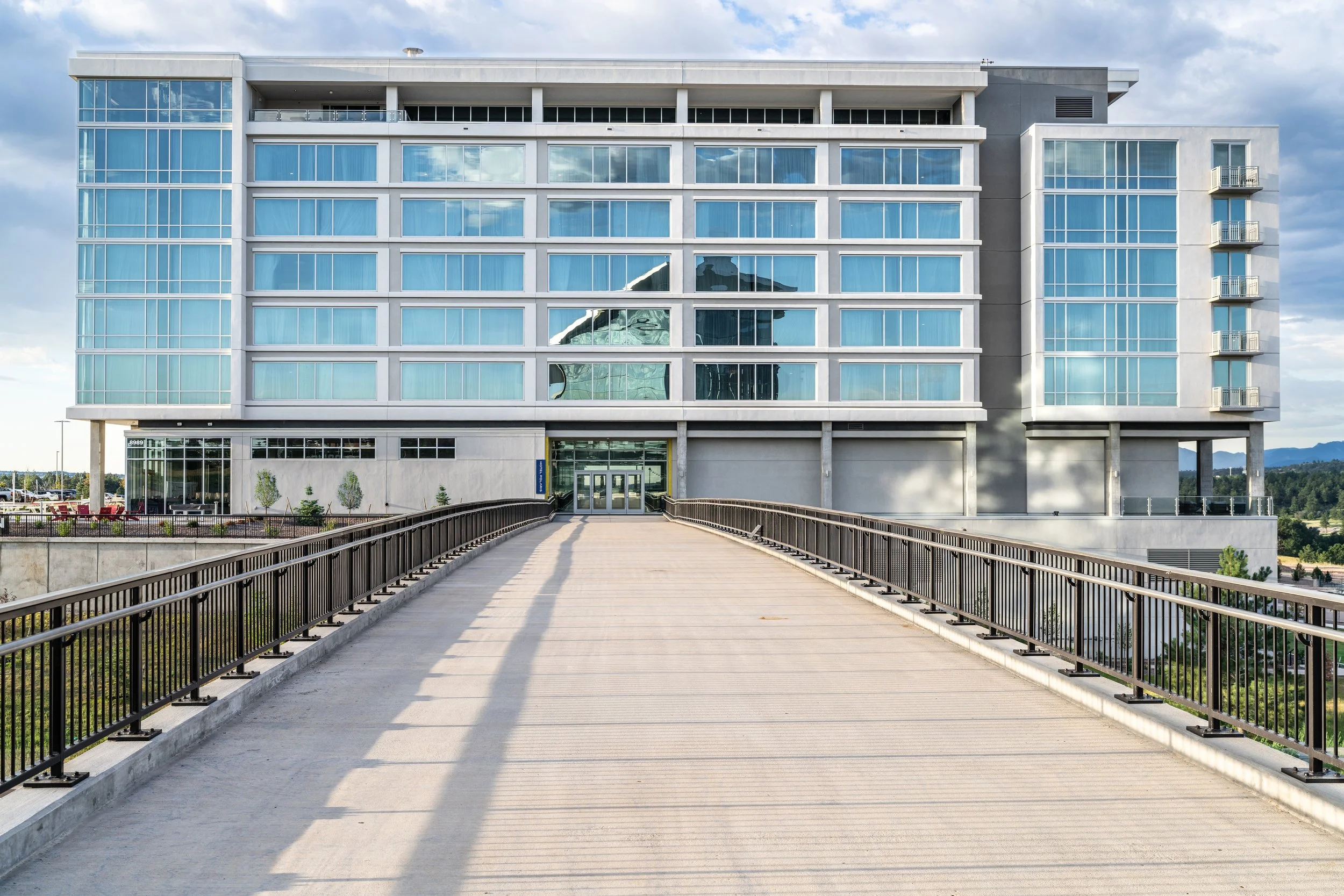
Architectural Forms: Stacking forms within the hotel emulate the facades of the Academy’s buildings, while repetition, folding planes, and horizontal hierarchies reinforce the institutional aesthetic of the campus.
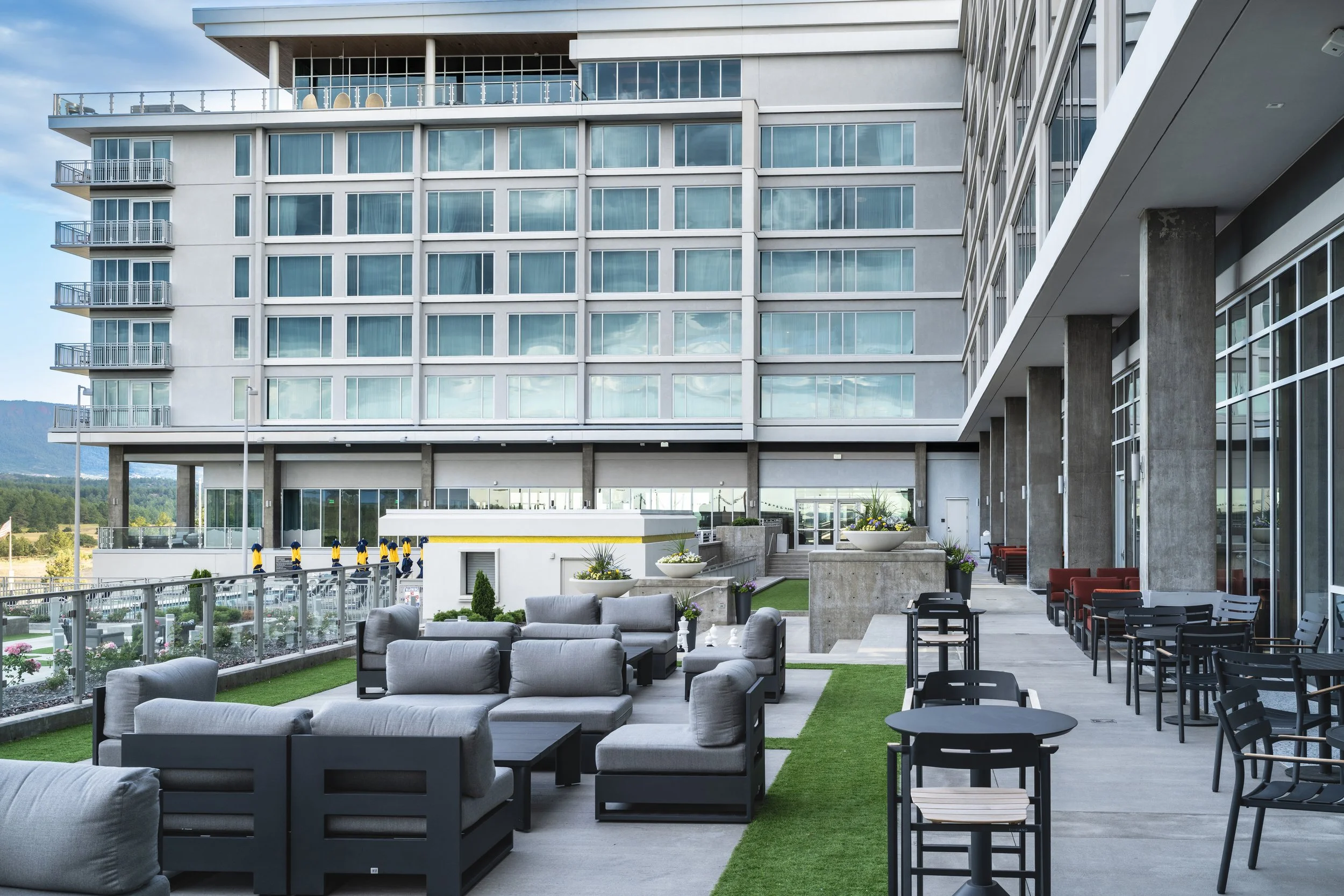
Proportions and Massing: The design of Hotel Polaris stays mindful of the proportions and massing found within the Academy’s buildings, utilizing exposed columns to emulate the soft story massing strategy at the Academy.
The exterior of the hotel incorporates materials and design features that reference the Air Force Academy, spanning the decades between their construction. Material and design below are just a few of the features and strategies:
Custom Mosaic Tile: The hotel’s entrances feature custom mosaic tiles in colors that match the primary colors found on campus.
Concrete, Glass, Aluminum, and Marble: These materials are consistent with the Academy’s building materials, ensuring visual continuity.
Hardscape Patterns: The hotel’s exterior patterns take inspiration from notable features on campus, such as the Air Gardens emulated in the ballroom roof pattern at the hotel, and the hotel terrace, which pulls organizing principles from Cadet Plaza on campus.
Inside, the hotel features a mix of materials, furniture, and design motifs inspired by the Academy:
Materials: The use timeless materials like quarter-cut walnut, terrazzo, and brass, complement the hotel’s connection to the Academy.
Furniture: Throughout the hotel, mid-century modern classics from renowned furniture makers like Herman Miller, Florence Knoll, Fritz Hansen, and Mies Van Der Rohe were used to integrate pieces from the time of the campus.
Key Spaces and Design Features
Lobby:
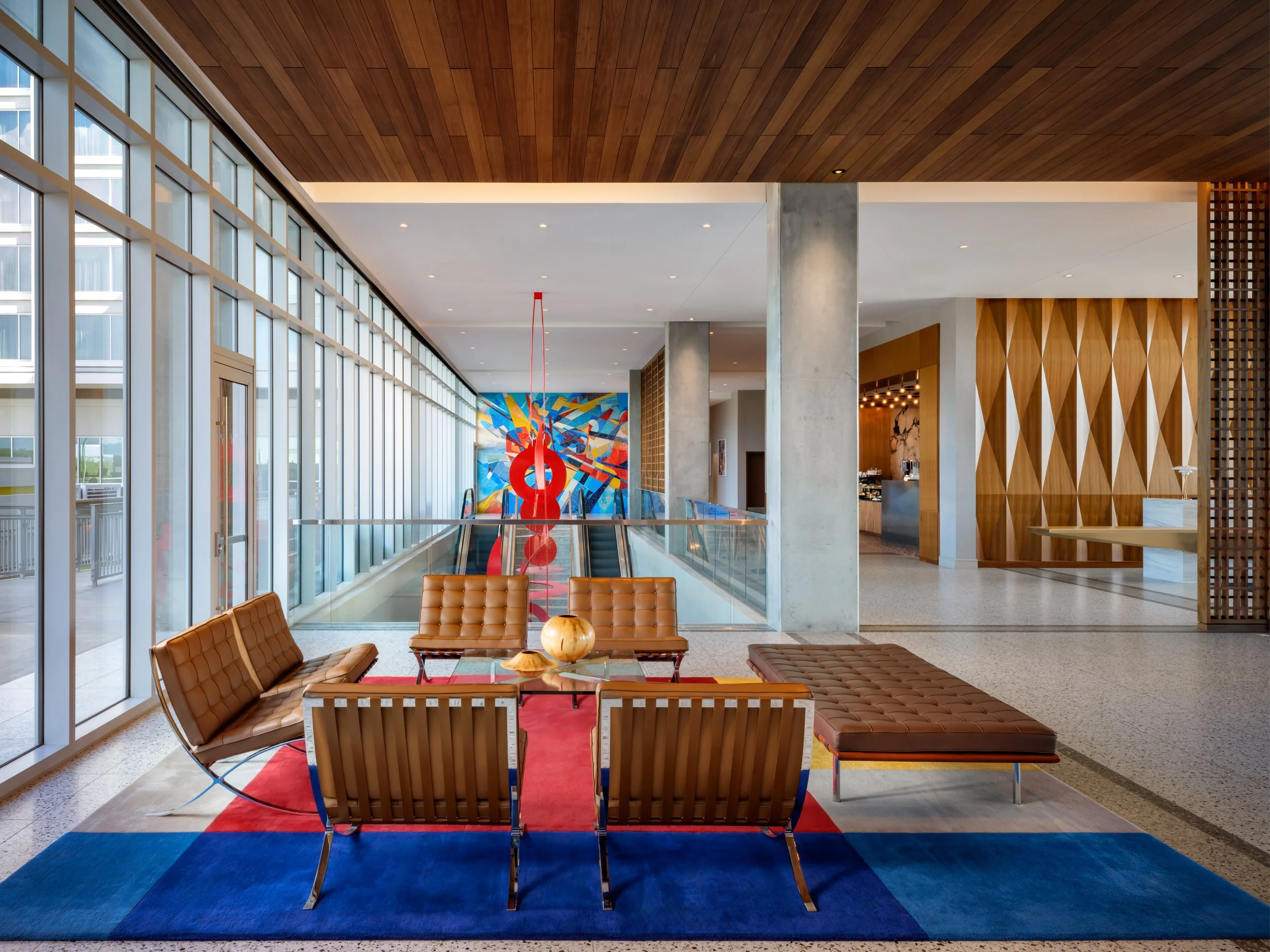
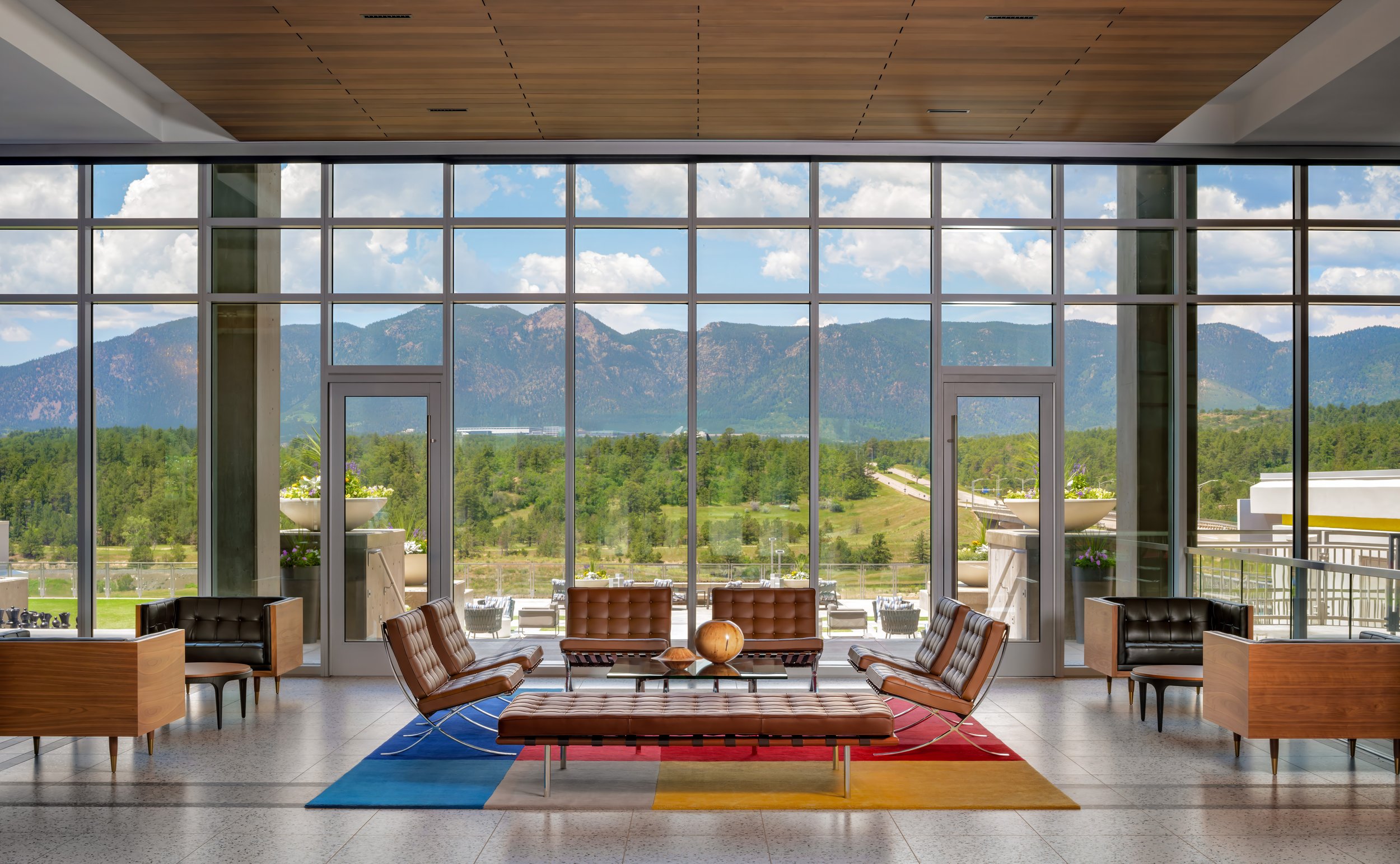
The biggest design element is the framed view of the campus itself, with full height glass opposite the entrance framing the campus from the moment the user enters the hotel.
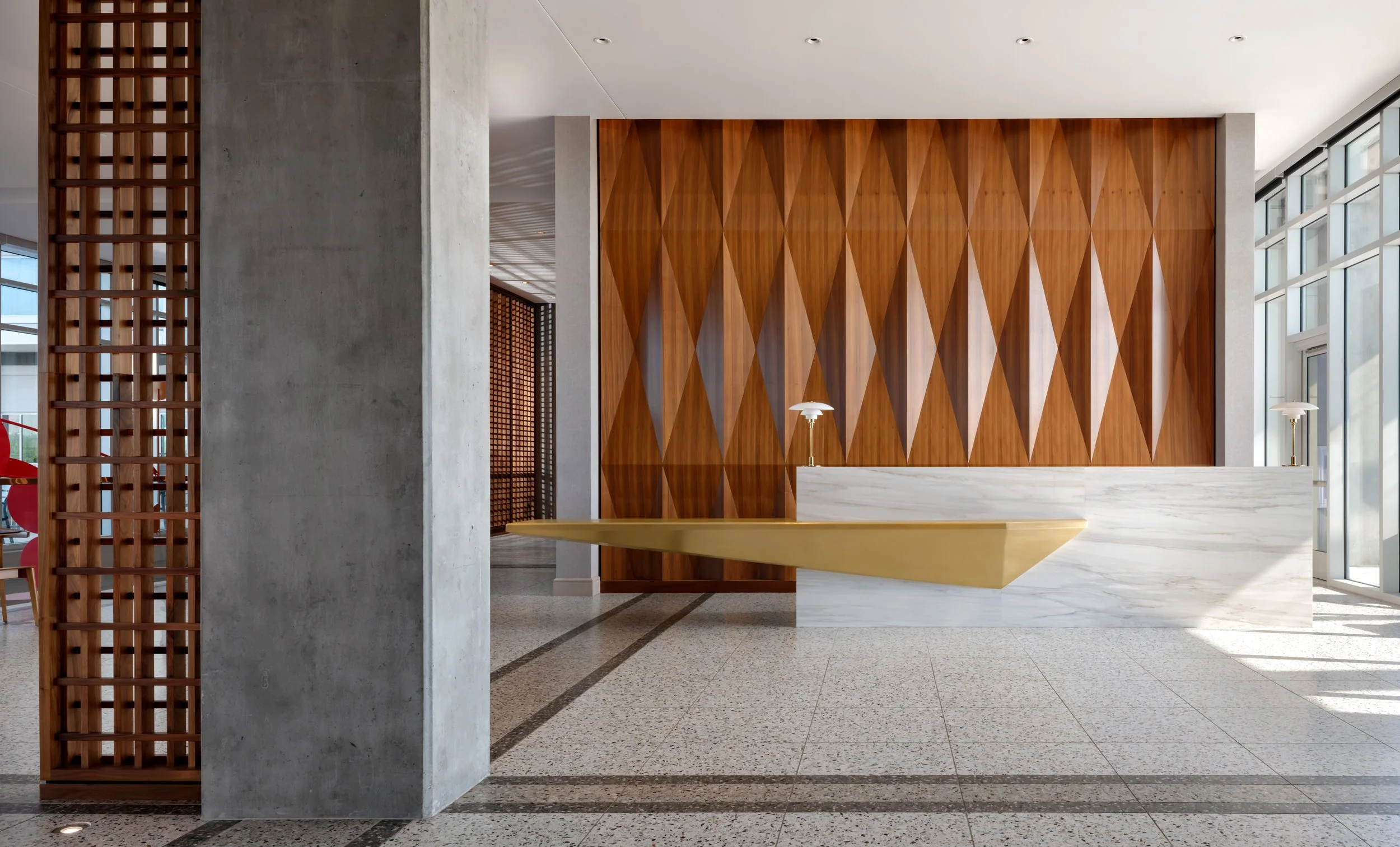
The tile floor replicates the design of the cadet plaza, featuring terrazzo tiles with contrasting bands throughout.
The front desk draws inspiration from planes and aviation, featuring a wing-like form supported by a block plinth made from the same stone found at the academy. Behind the desk, a custom millwork wood wall inspired by the campus chapel and a walnut wood credenza designed by Albert Parvin.
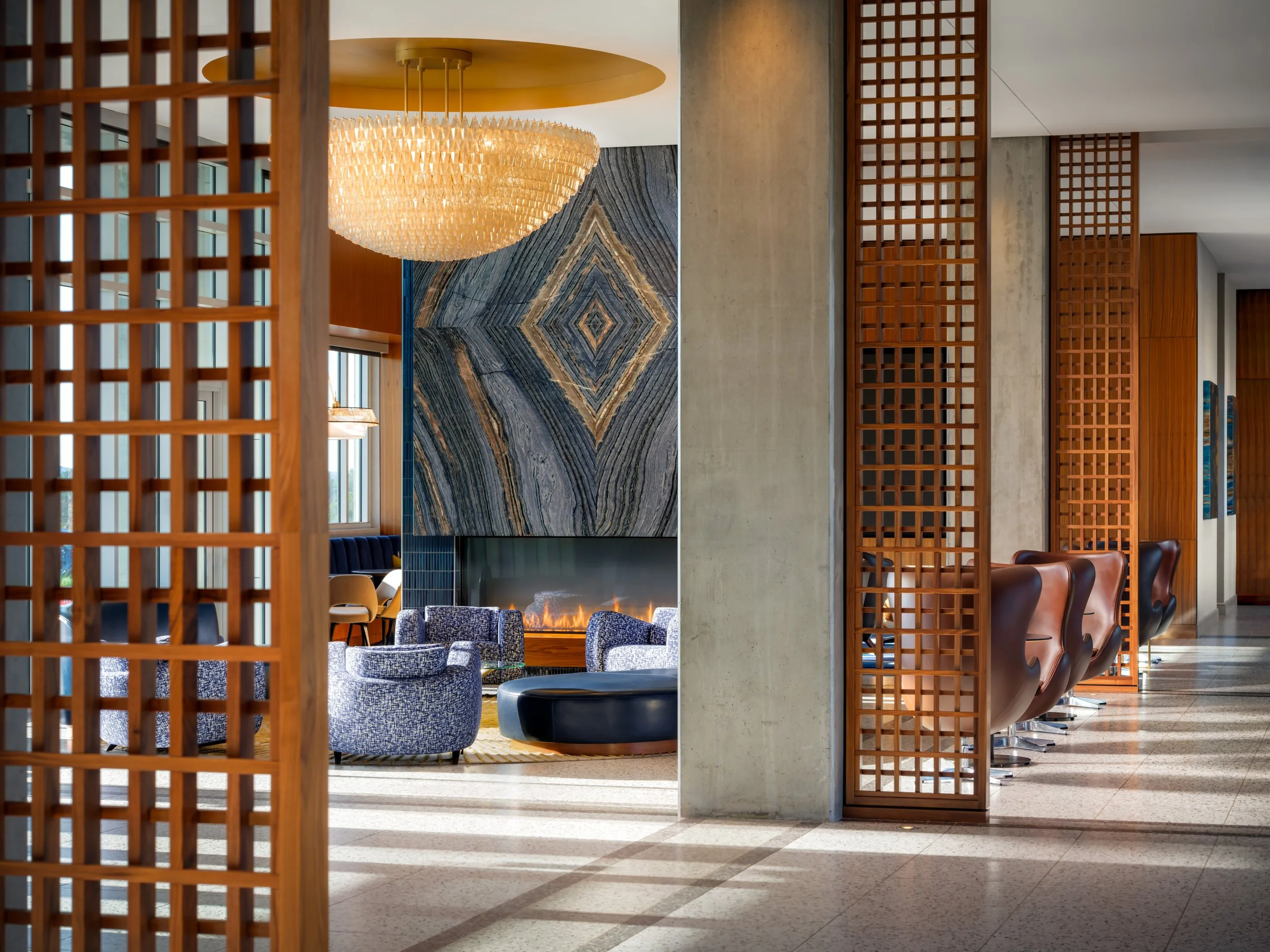
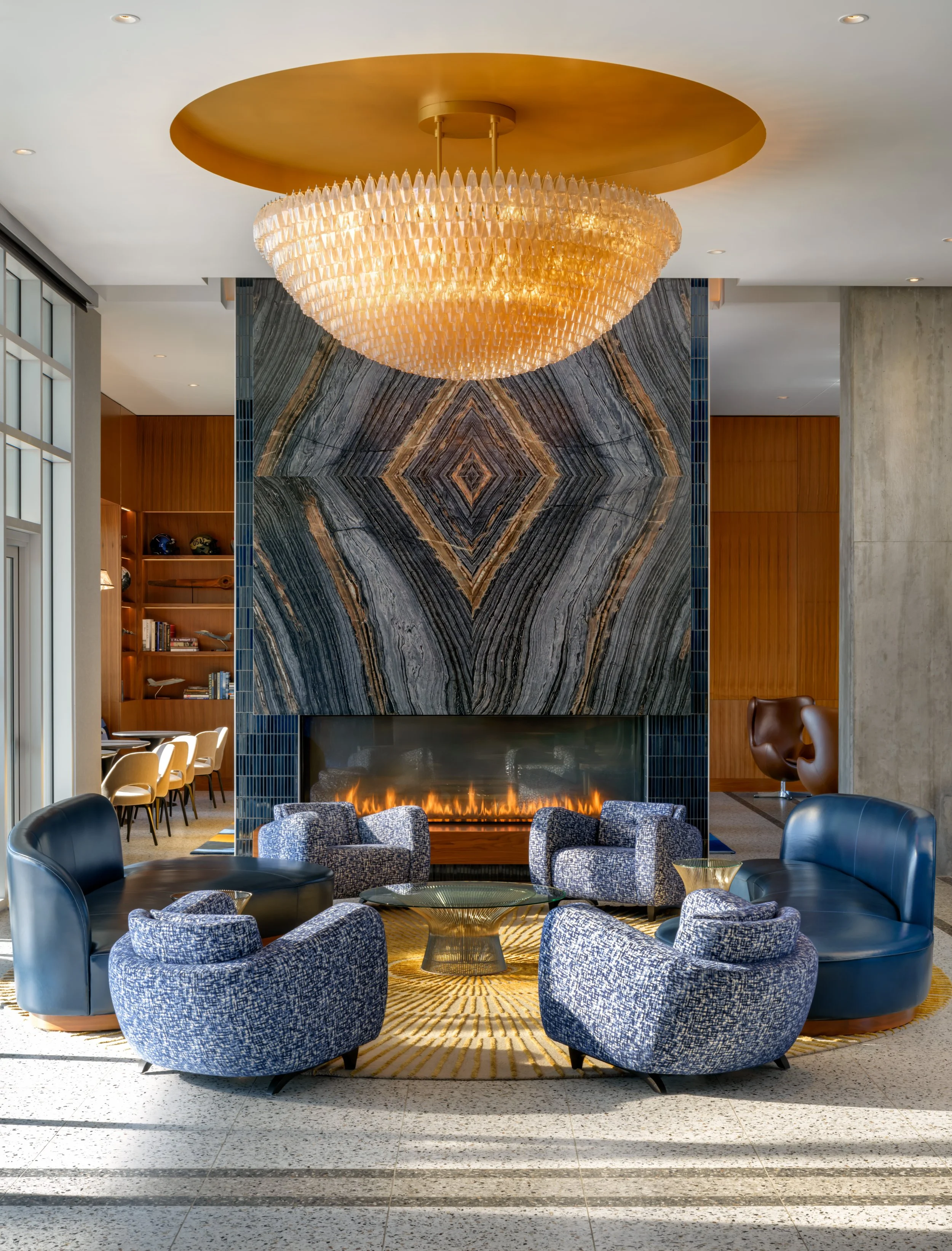
A double-sided fireplace serves to separate the front lobby from the lounge, greeting guests with warmth upon entry. The Café Argento stone is four-way book-matched, hinting to the 1929 Barcelona Pavilion design by Mies van der Rohe.
The lobby seating area features a massive Poliedri chandelier designed by Carlo Scarpa and produced in Murano, Italy. The seating, including the sofa, is inspired by Vladimir Kagan and other designers from that era, with proportions tailored to fit the scale of the space. A custom starburst rug designed by Damien Langlois- Meurinne reflects the sunset views visible every day from the area.
The lounge is designed as a relaxed space, perfect for watching the game on a large TV or enjoying the news with a morning coffee. The space is surrounded by custom millwork and quarter-cut walnut, a feature found throughout the academy. The rug is a custom design inspired by a 1950s art piece. The furniture includes a custom sofa influenced by Edward Wormley, a Knoll Saarinen table by the window, as well as Eames Lounge Chairs and Papa Bear Chairs by Hans Wegner.
Lobby Bar:
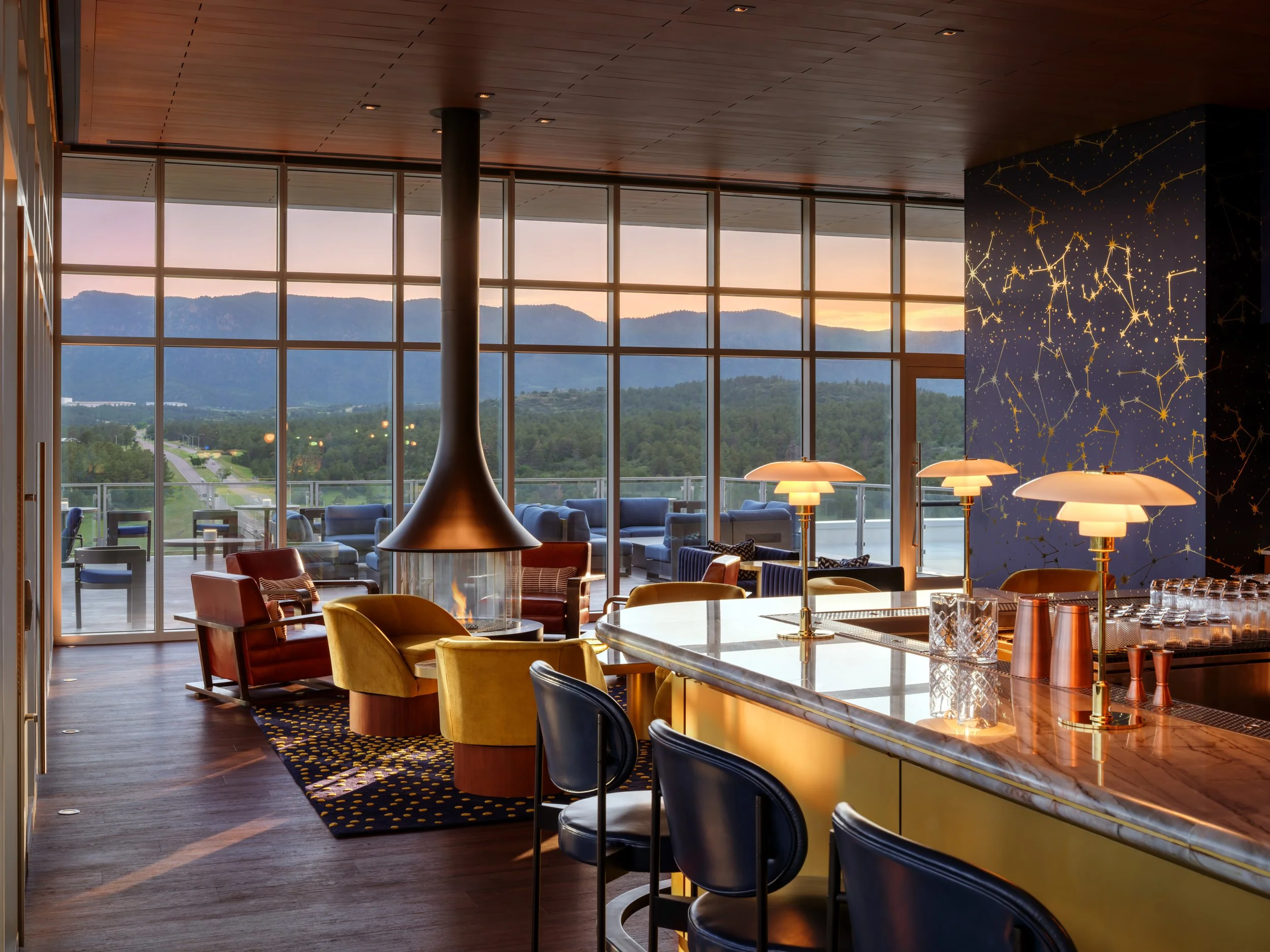
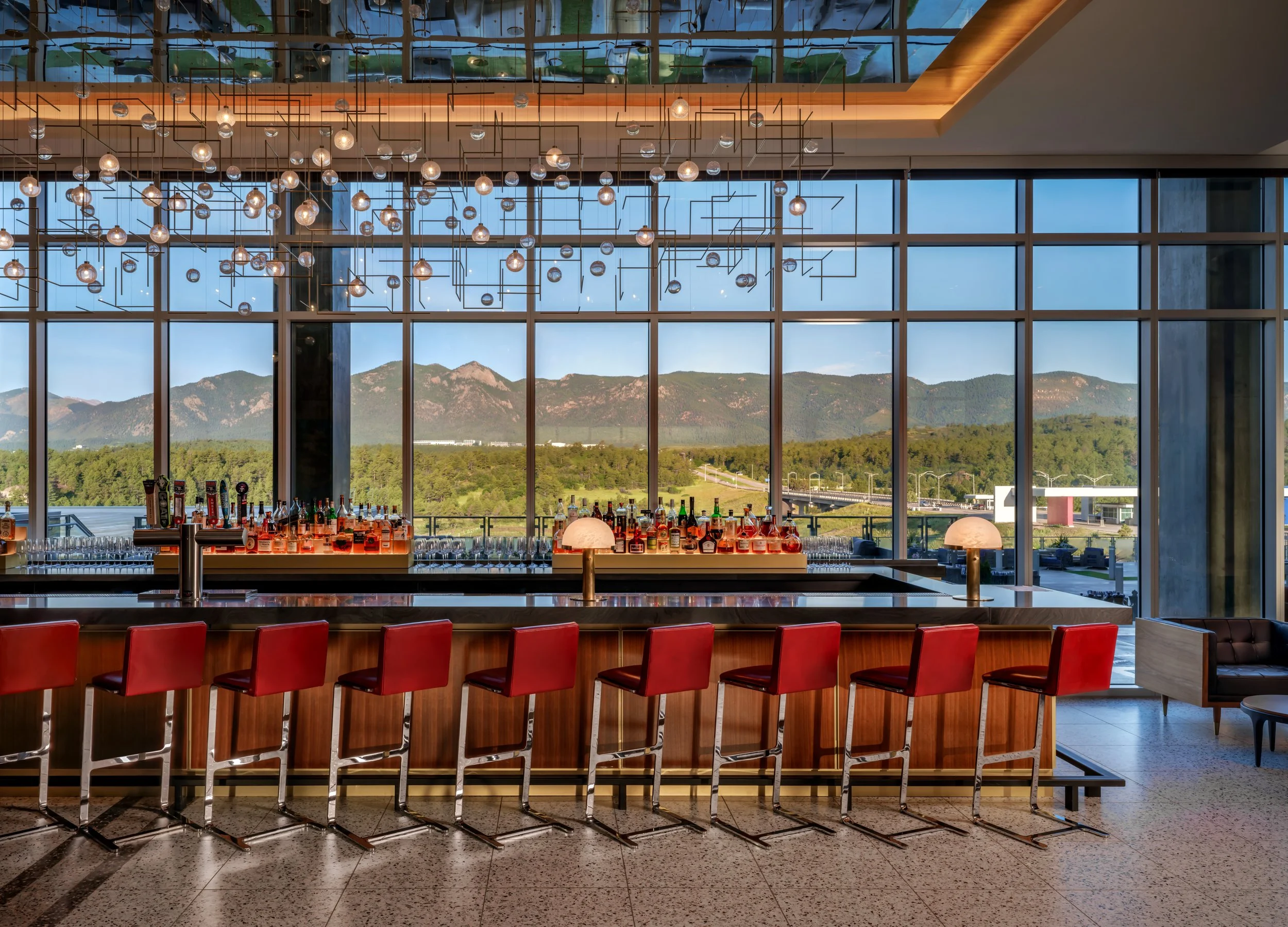
The bar was designed with simplicity and elegance in mind, using Black Sand, stone and brass. Its purpose is to complement the view from the seats, designed by Mies van der Rohe, offering unobstructed views of the Academy and one of the best spots for sunset views. Above the bar, a chandelier inspired by dandelions found on the site floats delicately, again supporting the view-centric focus of the lobby while tying elegance into the ceiling.
The design blends organic and structural elements, reminiscent of Skidmore, Owings & Merrill (SOM)’s original concept of Nature and Structure.
Coffee Shop:
The coffee shop is designed to complement the lobby, featuring walnut tambour millwork and stone to enhance the coffee experience, with custom pendant lighting that reinforces grid and axial order in the overall design.
Ballroom Level:
The ballroom features custom carpeting inspired by the design of the Air Force Academy Chapel, with abstracted lines and elements applied throughout the pre-function areas and meeting rooms. Photographs throughout the ballroom level help connect the space back to the campus and the Air Force.
Spa:
The spa is designed as a sanctuary that emphasizes the natural beauty of the surrounding area. With 2,000 square feet of terrace space offering panoramic mountain views, the spa’s interiors include stone, wood, and zero-gravity beds for ultimate relaxation.
Dooley’s:
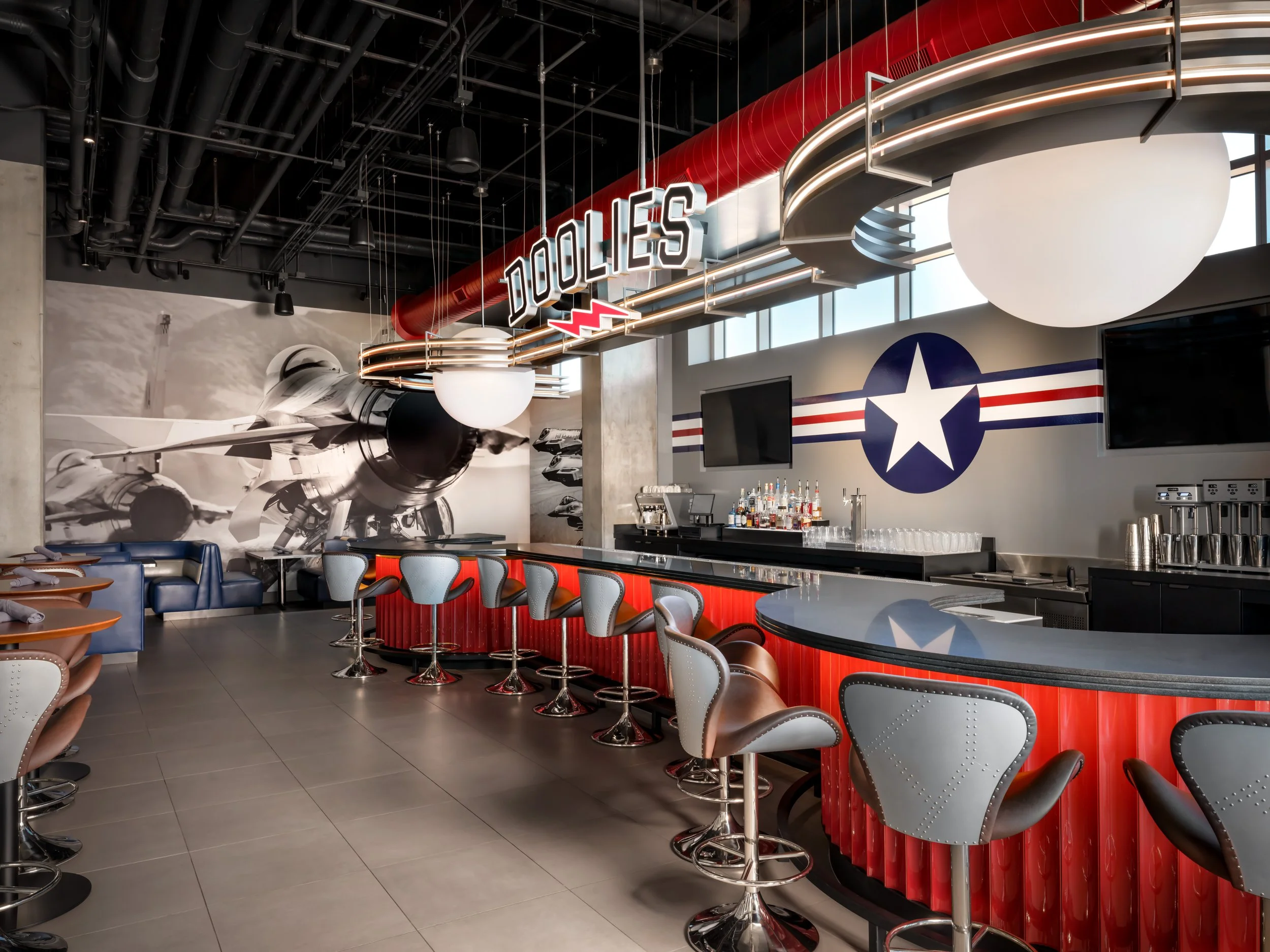
Dooley’s design is inspired by the classic diner of the 50s and 60s. The large central bar, with its rounded edges and custom tiled front, along with bar stools made from aviation materials and bold striped banquettes, all contribute to this nostalgic theme. Large murals and model airplanes suspended in formation from the ceiling reinforce the connection to the Academy. A standout feature for many is the second level, which houses three flight simulators.
The diner showcases large, custom photographs of Air Force aircraft both on the ground and in flight, captured by Christopher Vasquez, a former F-16 pilot and 1997 USAFA graduate. Much of his stunning photography is prominently displayed throughout the hotel.
Pamela’s:
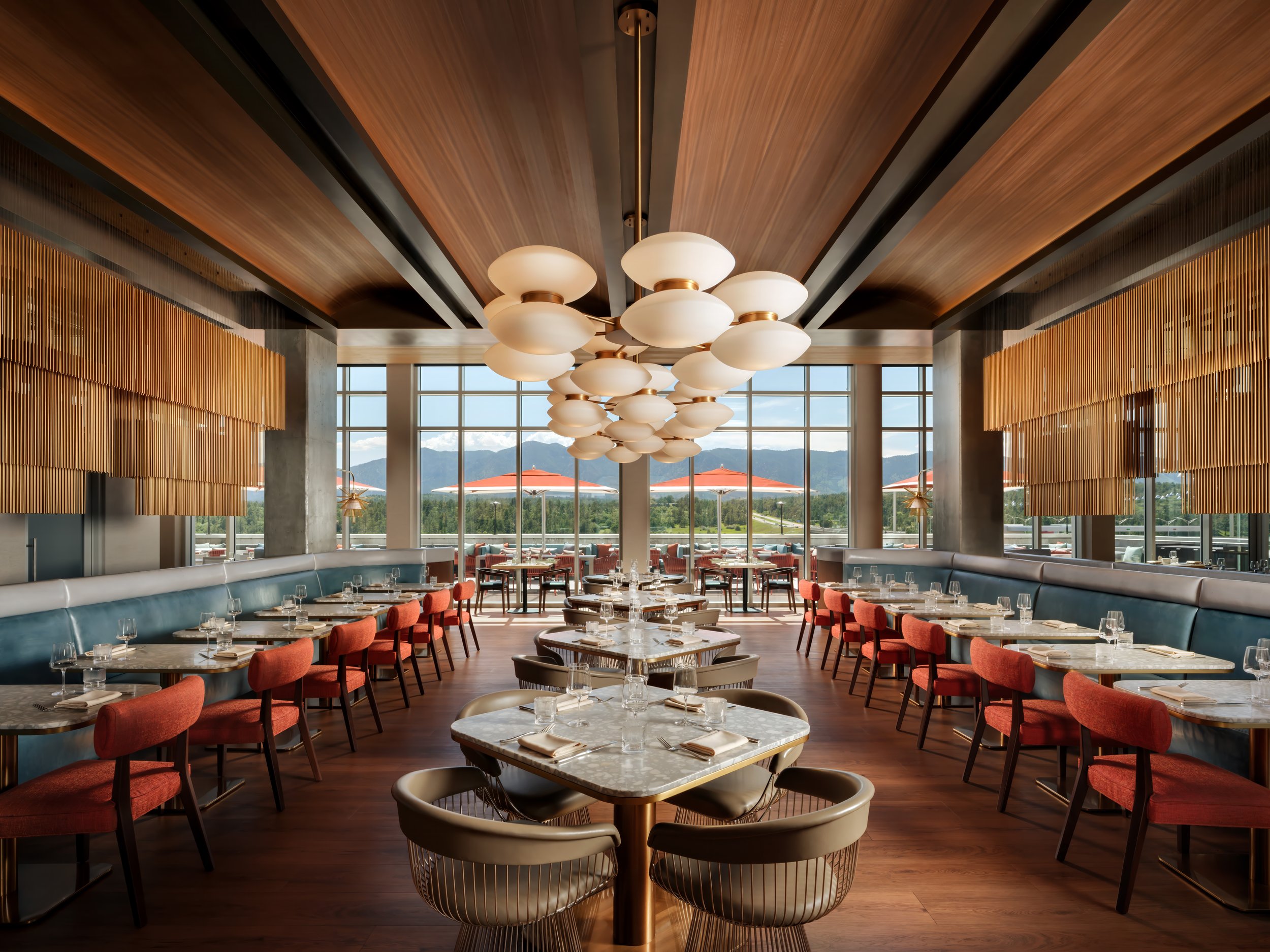
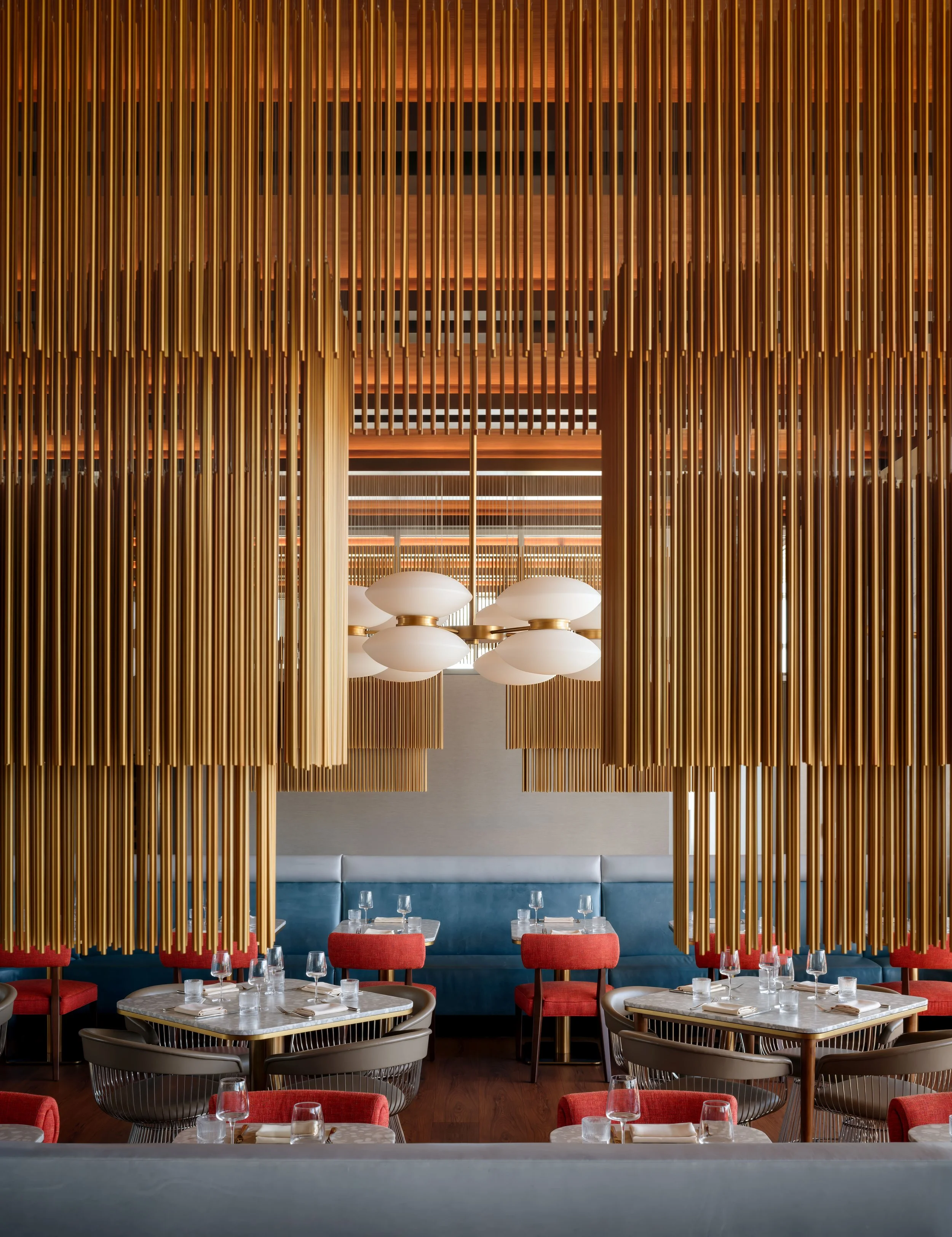
Pamela’s restaurant features vaulted ceilings with a walnut veneer, complemented by custom walnut and leather banquettes, custom chandeliers, and a large-scale brass art installation inspired by the works of Bertoia and Platner. These design elements come together to create an elegant atmosphere for the hotel’s fine dining experience. Additionally, the restaurant boasts a spacious outdoor dining terrace with breathtaking views of the Front Range and the Air Force Academy.
Guestrooms:
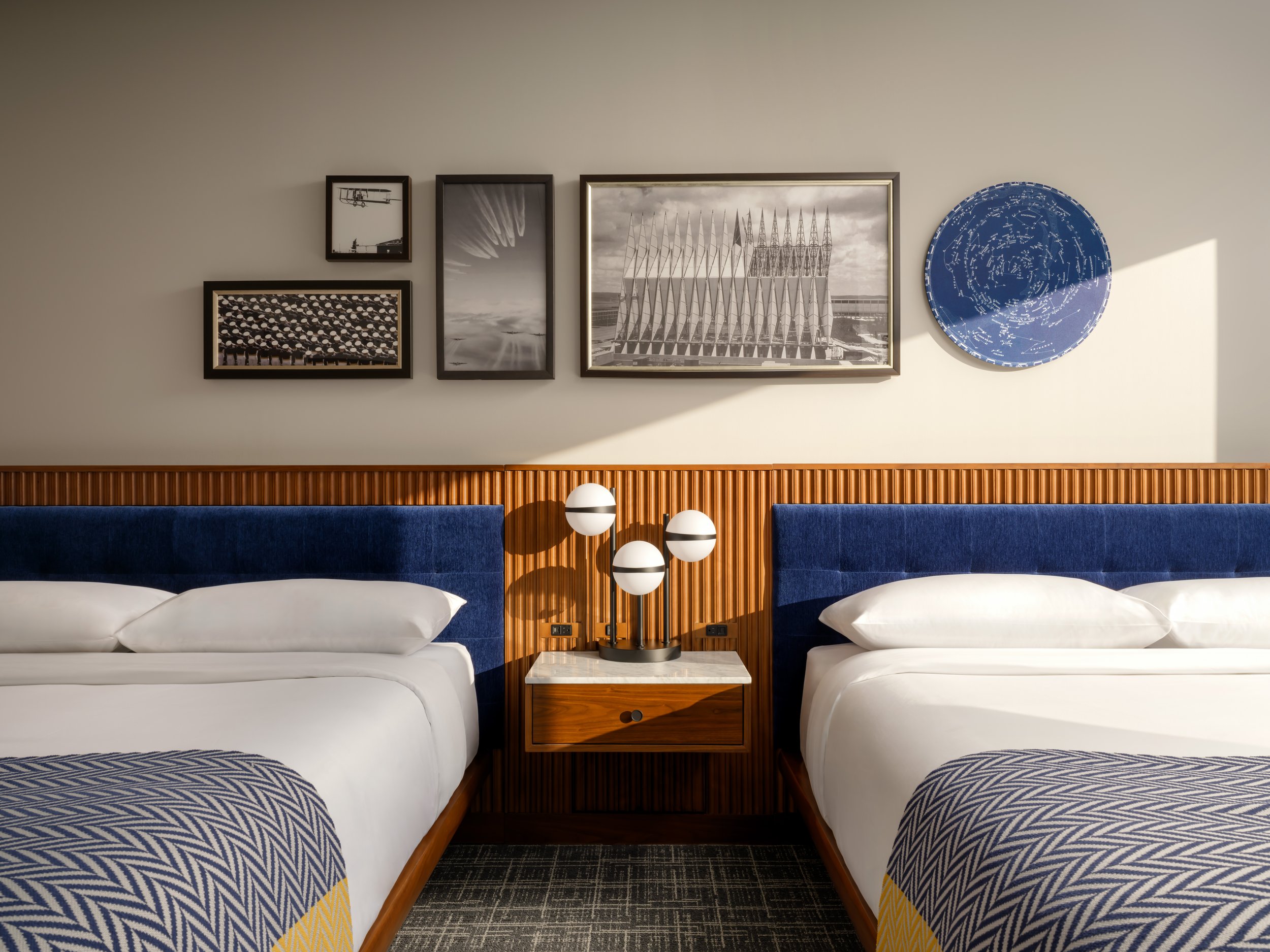
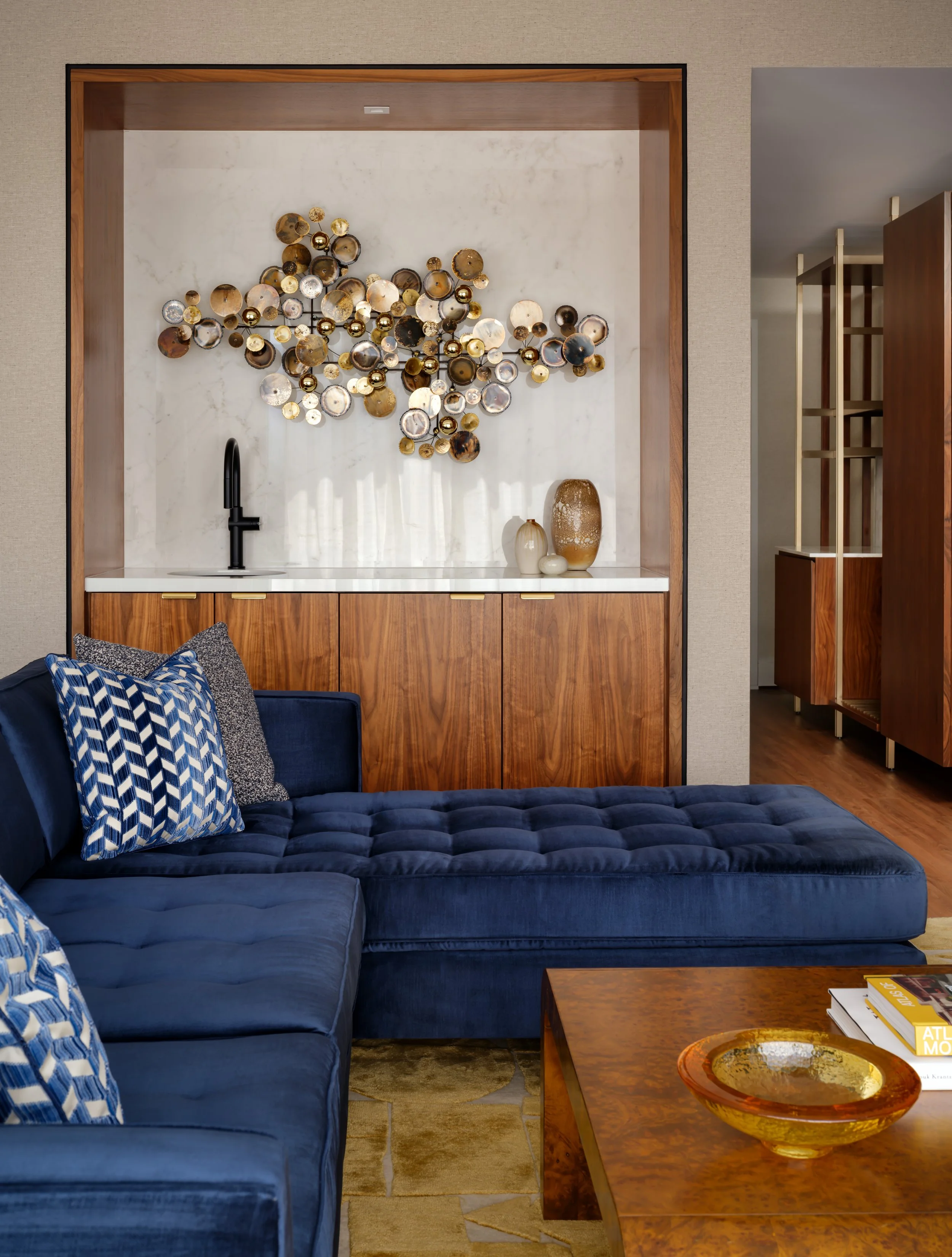
The guestrooms offer two distinct designs, with the top floor providing an upgraded experience. Both designs draw heavily from the past while looking toward the future. They incorporate materials like walnut wood, leather, velvet, and linen fabrics. The primary guestroom design features a wall-to-wall unit with custom tambour wood and a blue velvet box-tufted headboard. A Florence Knoll- inspired sofa is integrated into the unit, placed by the window for guests to enjoy stunning views. Opposite the bed, a custom- designed unit includes a TV, dresser, and desk, all crafted in walnut with Carrara marble tops. The bathroom blends terrazzo walls with a stone-tile floor, echoing the stone seen on campus.
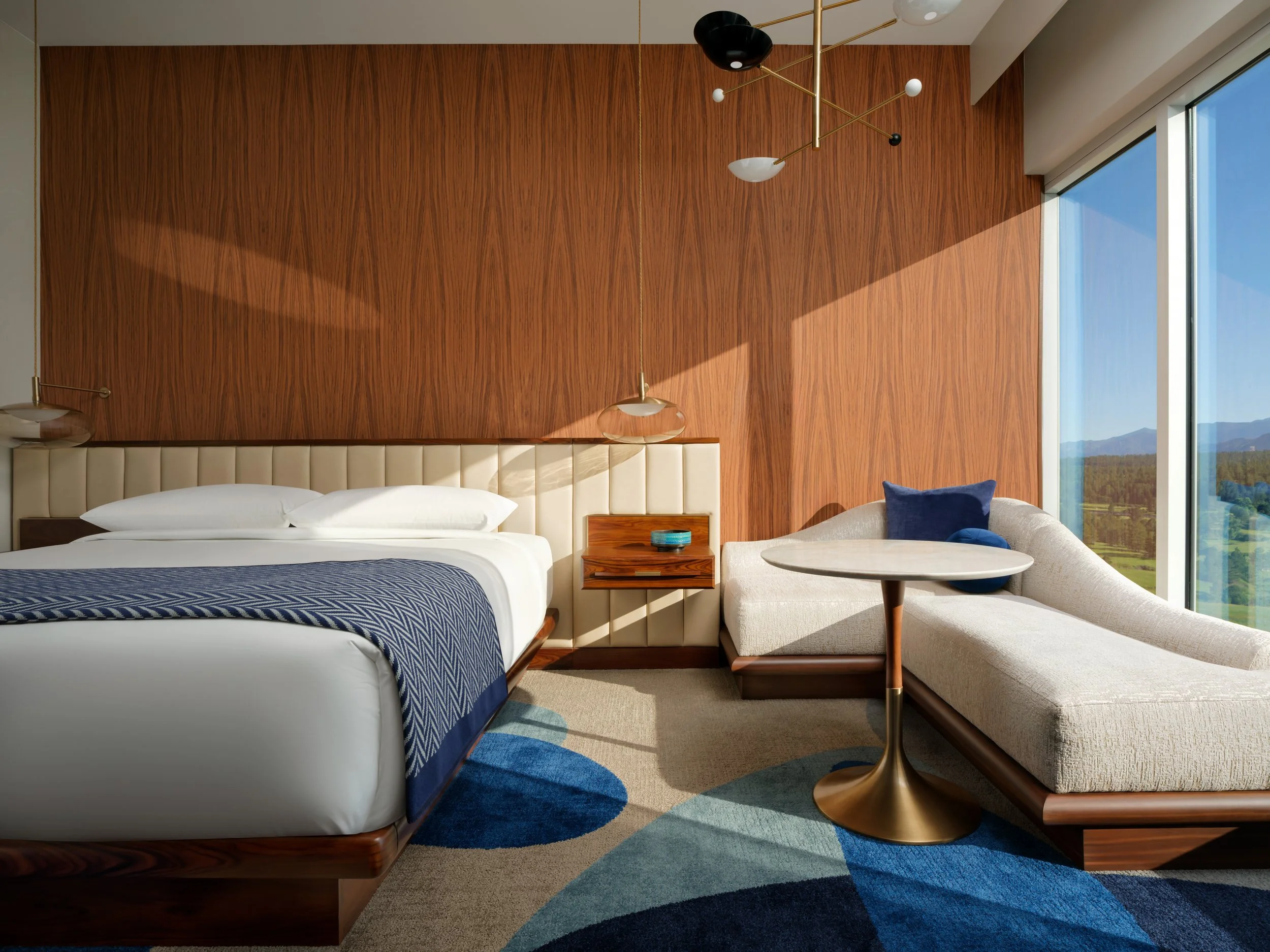
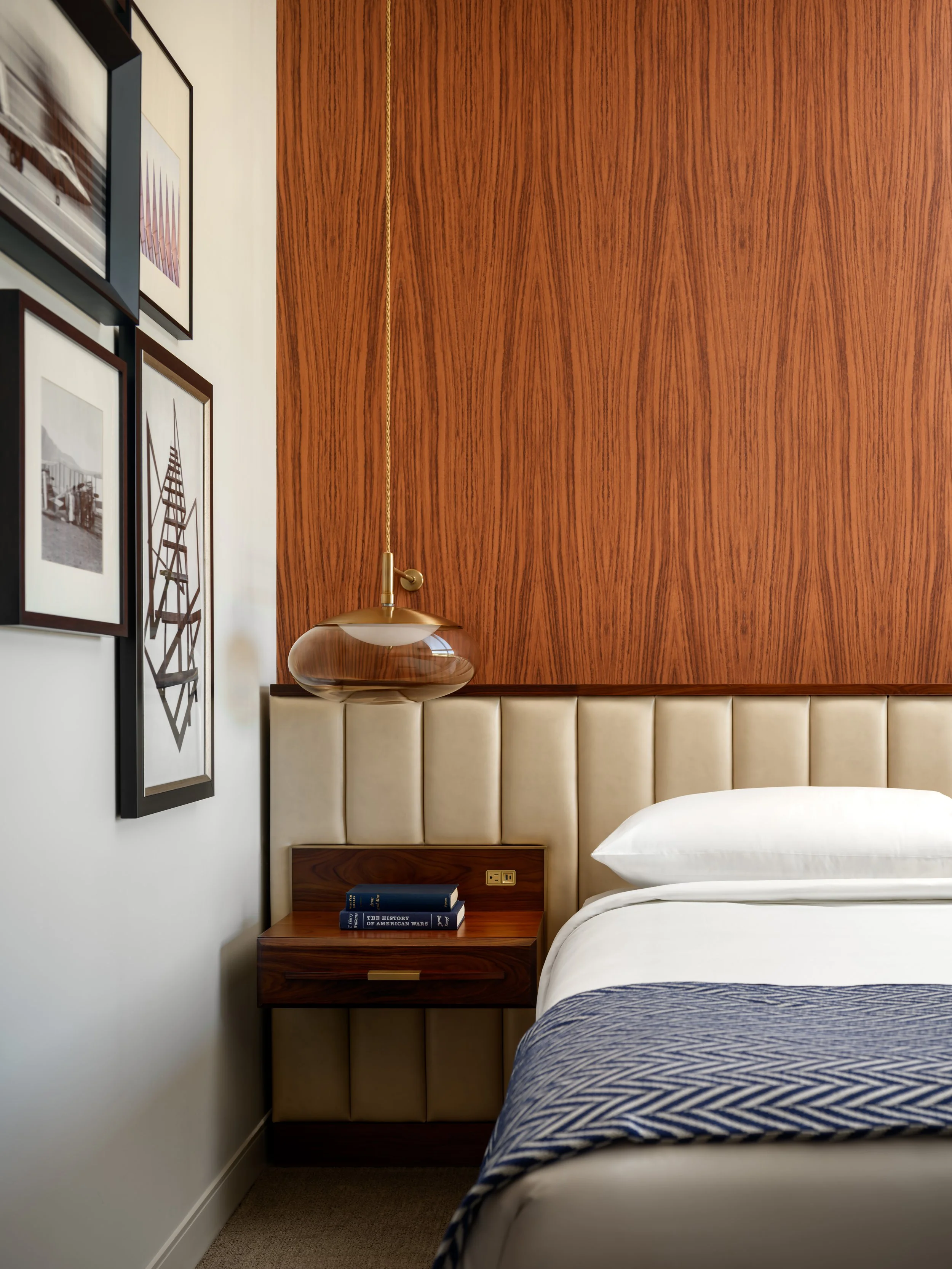
The upgraded guestroom features a striking walnut floor-to-ceiling wall behind the bed, paired with a custom leather vinyl headboard and glass pendant lights at each nightstand. The carpet design is inspired by the work of Victor Vasarely. Above the sofa, a Stillnova- inspired pendant light mimics the movement of a mobile. The bathroom has brass fittings, floor-to-ceiling marble tile, and quartzite countertops, complemented by a custom brass and walnut vanity.
Rooftop Lounge – The Aviator:
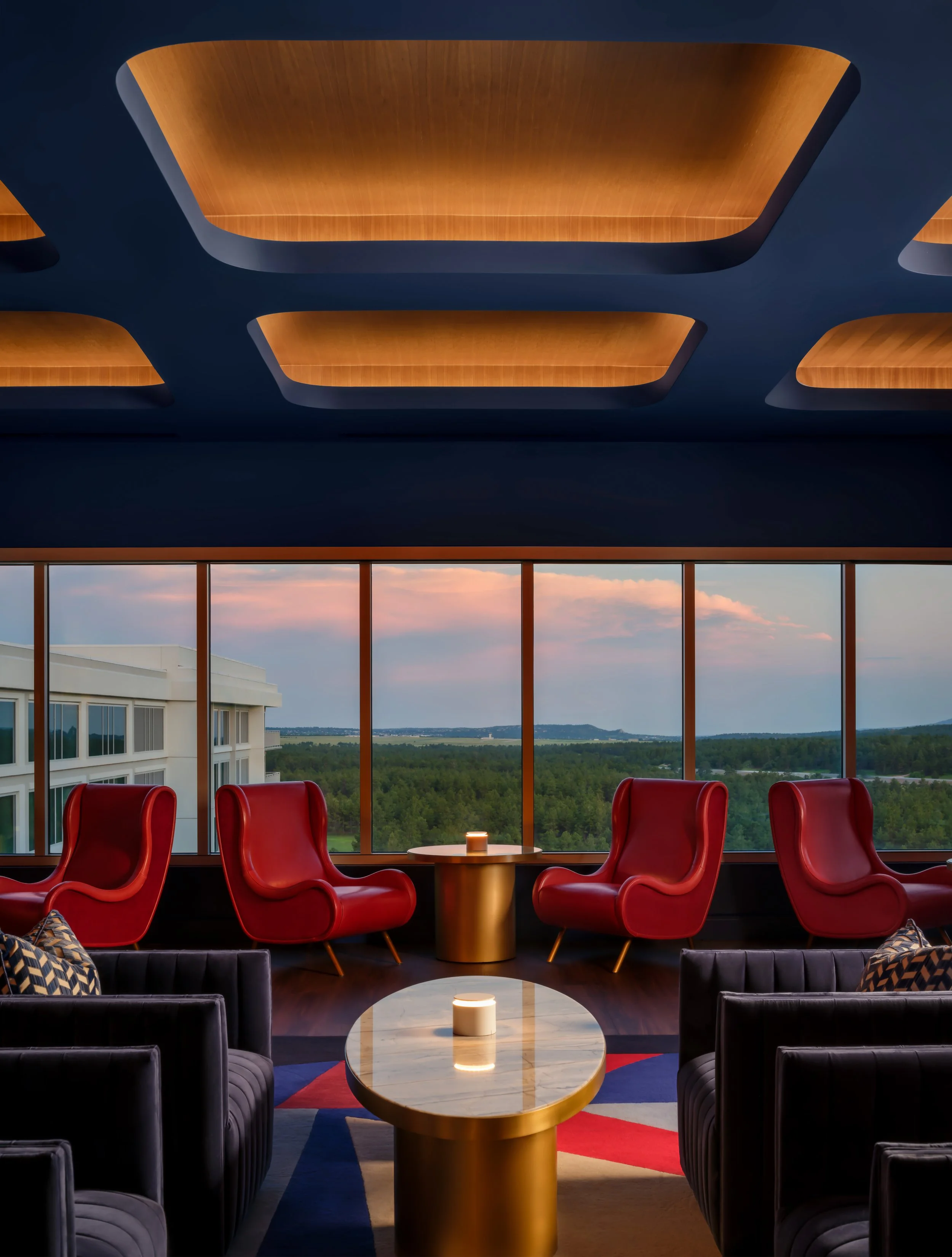
The Aviator, located on the rooftop, offers the best views in the hotel and throughout Colorado Springs. The space's centerpiece is the wraparound bar, complemented by a cozy corner fireplace framed by windows. The bar is adorned with brass-paneled fronts and topped with Beverly Blue quartzite. Above, the wood ceiling slopes upward toward the breathtaking mountain views. The design is inspired by the concept of space and star navigation, a technique pilots used before radar. The atmosphere evokes a speakeasy feel—dark and moody, with rich woods, predominantly Air Force blue, and accents of deep red and gold. A custom breeze block, designed and produced by the architect, serves as both a screen wall and a striking piece of artwork within the space.
Art and Custom Installations
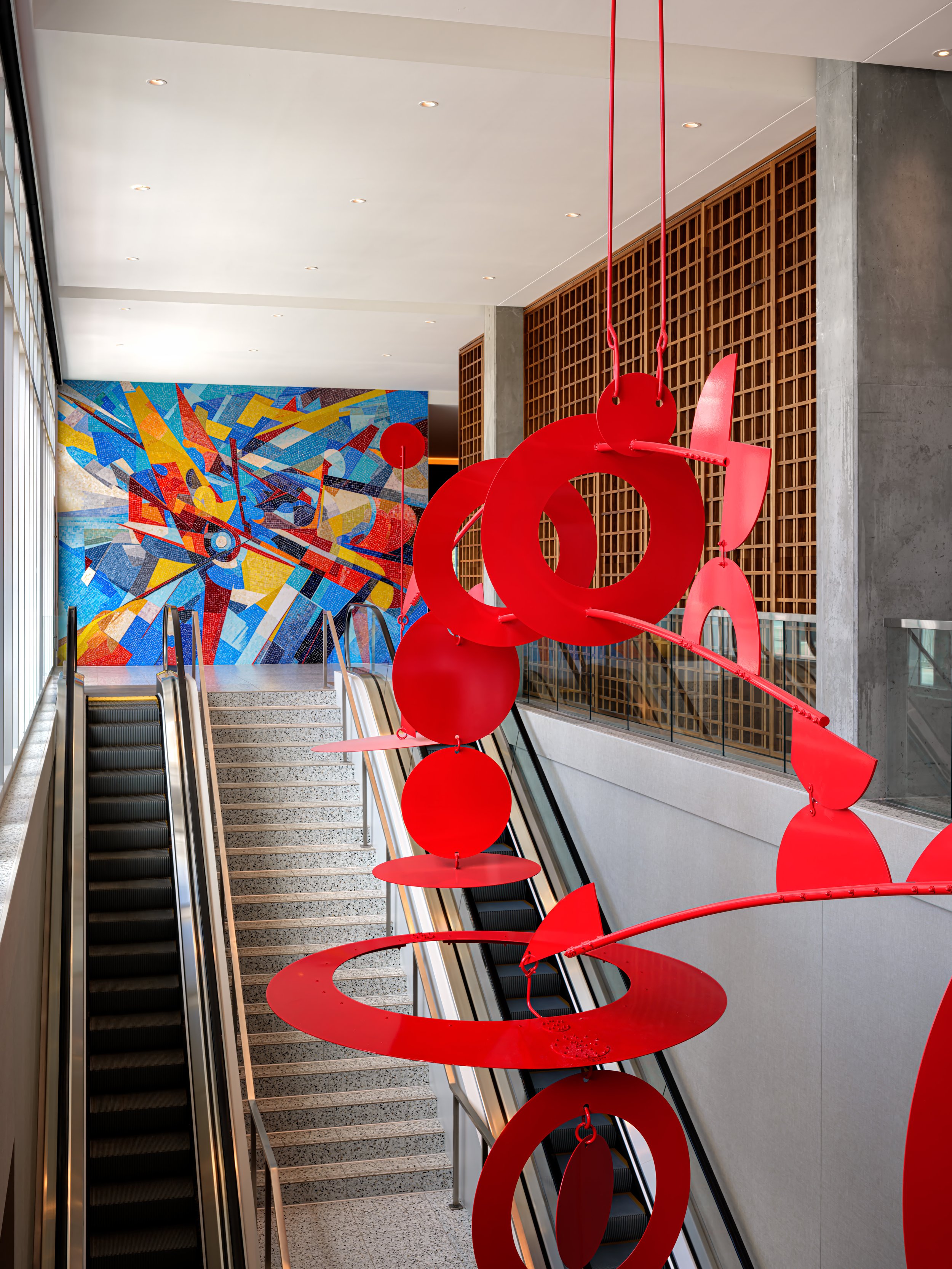
Mobile and Mural: A two-story mobile by local artist Robert Delaney, inspired by Alexander Calder, floats between the lobby and conference levels, creating a dynamic and immersive environment. This mobile is paired with a custom glass mosaic mural depicting an abstracted World War II aircraft dogfight.
Photographic Art: Large-scale photographs by Christopher Vasquez, a former F-16 pilot and 1997 USAFA graduate, are featured throughout the hotel, tying the space back to its military heritage and connection to the Academy.
Breeze Block Installation: The breeze block is a mid-century modern staple, with this installation designed and produced at BLUR Workshop. The opening in the block is inspired by the negative form (void) derived from the Polaris Hall by SOM. The design features two intersecting cones cutting through a solid cube to create the opening. The block is made from sealed concrete, reflecting the materiality of the campus and connecting the design to its architectural context. In conclusion, the hotel’s design is a thoughtful and respectful homage to the United States Air Force Academy. Every element—from the materials used to the layout and decorative pieces—has been meticulously crafted to honor the history, structure, and aesthetics of the Academy while offering a contemporary, luxurious experience for guests. The seamless integration of the natural landscape, the architectural features of the Academy, and a carefully selected palette of materials creates a unique destination for visitors to Colorado Springs.
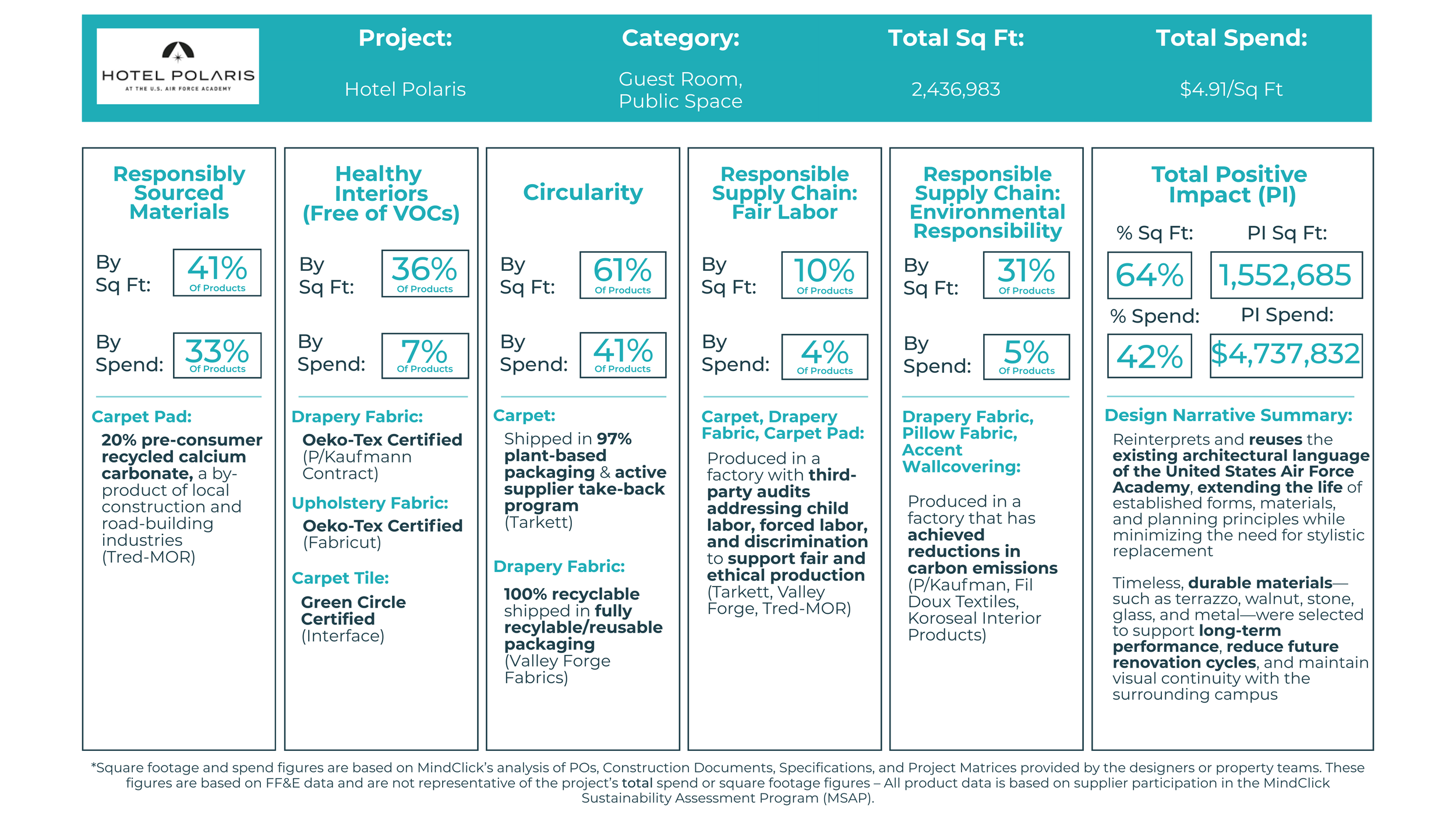
Impact and Wellness Overview